
What online water polo betting actually costs in Great Britain this year
 Available in US
Water polo sits in an odd corner of the British sportsbook. The sport has been at the Olympics since 1900, World Championships since 1973 and a Women’s World Championship since 1986, yet most UK bookmakers treat it as a fixture-list afterthought rather than a flagship product. That makes the cost question sharper, not weaker — a thin market is one where the few prices that exist carry more margin, and where a bonus the bettor finds appealing can quietly take more from them than the headline figure suggests. This guide walks through what online water polo betting costs in Great Britain in 2026: the licence standing between a bettor and the operator, the way odds are built so the bookmaker’s cut is visible, the bonus terms that hide inside “free” offers, and ten bookmakers the Gambling Commission’s public register actually licences for remote betting.
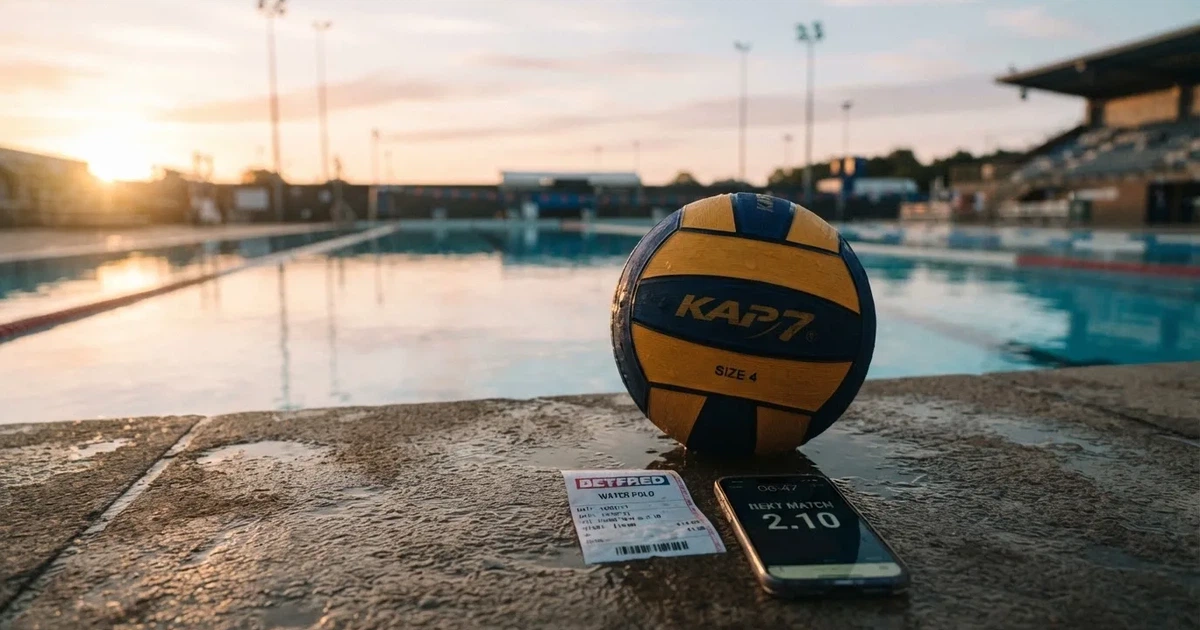
The figures and licence details below were checked against the Gambling Commission’s public register on 30 October 2026. Treat them as a snapshot, not a contract: bookmakers change terms, swap welcome offers and adjust prices faster than any guide can reprint.
What water polo is, and why this matters at the betting slip
A water polo team fields seven players — six in the water plus a goalkeeper — with up to six substitutes on the bench. Matches run in four quarters rather than two halves, and the pool is deep enough that nobody can touch the bottom, which is one reason the sport has never really settled into British club culture the way football has. World Aquatics governs the international game. Men’s water polo entered the Olympics at Paris 1900; women’s water polo joined the programme in Sydney 2000. A men’s World Championship has been held inside the World Aquatics Championships since 1973, and a women’s competition since 1986.
Why these notes belong on a betting page: every market on the slip — match winner, handicap, total goals, quarter betting — rests on the structure of the game. A four-quarter match produces four settled periods, which gives bookmakers four ways to open a market but gives a bettor four times the variables to research. The thinness of the British market, where many fixtures sit with a single price rather than a full grid, is part of why a single quote of margin matters more than the same quote on a Premier League match.
The British licence is the only licence that matters
Every operator taking remote bets from customers in Great Britain needs a Gambling Commission licence, regardless of where the company sits. Since the Gambling (Licensing and Advertising) Act 2014 brought the test to the point of consumption, a Curaçao or Malta licence alone is not enough. Section 33 and section 36 of the Gambling Act 2005, as amended, are what makes the GB licence compulsory; the offence sits with the operator, not the customer.

A GB licence is not an endorsement of quality, only proof that the operator has passed the regulator’s checks. The things it carries are practical:
- Identity verified before the first deposit — name, address and date of birth, since 7 May 2019, even to claim a free bet or bonus
- GAMSTOP membership, mandatory for online operators since 31 March 2020
- A financial vulnerability check on customers whose deposits minus withdrawals exceed £150 in any rolling 30 days, in force since 28 February 2025
- A cap on bonus wagering of 10x, in force since 19 January 2026
- A ban on credit-card deposits for gambling since 14 April 2020
A Malta or Curaçao licence on its own skips every one of those. The Commission’s own register is the place to confirm whether a brand is licensed; never trust a footer claim on a website, since the Commission has acted against brands displaying marks they never earned. The register can be searched by business name, trading name, domain or account number. Licensed operators routinely use .com addresses as well as .co.uk, so the domain proves nothing either way.
Northern Ireland sits outside the 2005 Act and runs its own older law. A “GB licence” is a Great Britain licence. The ten brands reviewed here each hold a Commission remote licence for general betting on real events.
What in-play means for water polo
In-play betting on water polo is offered by GB-licensed bookmakers and is governed by each operator’s licence conditions plus its own customer-protection duties, not by a blanket permission or a blanket ban. In practice the markets are thin: a few match-outcome prices, a handicap line, occasionally totals. A common misconception is that in-play is “unrestricted” as a legal matter; it is neither unrestricted nor prohibited by statute.
For a bettor, that translates into three trade-offs. First, prices move slowly because liquidity is light; the second and third ticks after a goal are often the last ticks at a useful price. Second, the cash-out values offered are wider than on a Premier League match because the model has less to calibrate against. Third, Bet Builders and same-game multis, which are standard on football, are rare on water polo — operators build fewer inputs, so the combinations the bettor can assemble are narrow. Where a brand offers Bet Builder across sports, a check of its current water polo selection is worth a minute before staking.
Responsible gambling: the safeguards that come with the licence
A GB licence carries a fixed bundle of safer-gambling tools, and the §10 of the LCCP (the social responsibility code) is where they live. The headline items:
GAMSTOP self-exclusion. Six-month, one-year, five-year or five-year-with-auto-renewal periods; the exclusion extends a further seven years after the minimum period ends unless the customer asks GAMSTOP to remove it. Betting shops run a separate service and are not covered by GAMSTOP.
Deposit limits. Operators must offer a gross deposit limit set on a fixed time frame. The first changes applied on 31 October 2025; a second phase was postponed to 30 September 2026 and whether it is live is not established. There is no state-set ceiling on deposits or losses in betting — limits are the customer’s own choice.
Financial vulnerability check. Triggered when deposits net of withdrawals cross £150 in a rolling 30-day window. The check looks at public-record signals such as bankruptcy and county court judgments; it is not an income check and not a credit-reference check.
Financial risk assessments. Announced in a staged plan by the Commission (article of 7 July 2026), with no start date. The press calls them “affordability checks”; the licence language is “financial risk assessments”. Until a start date is published, write “announced, staged, no start date”.
Help services. GamCare’s National Gambling Helpline, GambleAware, NHS gambling clinics and Gamblers Anonymous sit outside the licence but are the practical routes a bettor or a family member can take. Several bookmakers — including Fitzwilliam Sports, which links to GambleAware, GamStop and Gamblers Anonymous directly on its homepage — surface these from the safer-gambling page rather than burying them.
The audit point is worth saying plainly. A customer who holds a verified account at a GB-licensed operator pays a price for those safeguards: identity is confirmed before the first deposit, and a bonus that looks generous can be tied to turnover the customer has to clear at the operator’s pace. The customer of an offshore brand skips the verification step, gains no GAMSTOP coverage, has no Commission complaints route and no British consumer redress if funds are withheld, and falls outside the £150 vulnerability check and the 10x bonus cap. Either is a real choice; only one is a regulated one.
What water polo betting bonuses actually cost
Marketing language flatters the bettor before the small print arrives. Coral’s sports welcome offer is the clearest worked example in the present pack: deposit and bet £20 or more at minimum odds of 2.0 (1/1), receive £40 in free bets within seven days, free bets expiring seven days after issue, GB customers who opt in. BetMGM’s sports welcome offer for new UK customers depositing £10 or more and placing a sports bet within seven days is four £10 free bets — two football accas of 4+ selections, two sports multiples of 2+ — valid for seven days with minimum odds and opt-in required.
A few rules cut across every welcome offer on the table in 2026:
- Free bets are paid as credits, not cash. The stake is usually not returned with the win — the value comes from the profit, not the face value.
- Minimum odds of 2.0 (1/1) are now standard for the qualifying bet on a sports welcome offer; on the free bets themselves, minimum odds sit lower.
- Time limits are short. Seven days from issue to use, seven days from issue to clear the qualifying bet, is the typical envelope.
- Game restrictions are real. BetMGM splits its four free bets into specific bet types — two football accumulator tokens, two sports-multiple tokens — so a customer expecting four free bets on water polo gets two tied to football accas regardless.
- Wagering requirements on bonuses have been capped at 10x since 19 January 2026. A £10 bonus is capped at £100 of qualifying bets; a £50 bonus at £500. Combined-product offers that ask a customer to bet on betting and on casino, bingo or lottery to claim one reward are banned.
- Promo codes, voucher codes and affiliate links that “unlock” a larger bonus should be ignored. The Advertising Standards Authority codes on gambling promotions and the LCCP marketing conditions are the relevant frame, and an offer bigger than the headline is rarely what it seems.
The deeper cost is turnover. Where a bonus carries a 10x wagering factor on the bonus and the bonus is the only base, a £30 bonus means £300 of qualifying bets — a sum a thin market like water polo spreads across many days. Where the base is bonus plus deposit, the figure doubles. The expected loss on that turnover is governed by the market margin the section on odds works through below.
A punt that the offer is “free” because there is no deposit requirement is worth setting aside. Time spent qualifying and placing bets has a price; on a thin market the prices that meet a minimum-odds rule earn less than the headline suggests, and the cap on free-bet winnings — where it exists — sets a hard ceiling on what the offer can pay out.
How odds are built and where the margin hides
A bookmaker’s margin lives inside every price on the slip. Take a two-way market with decimal odds 1.90 and 1.90. The fair prices (a market with no margin) would imply that the two outcomes together return exactly what was staked across them. At 1.90 against 1.90, the calculation is 1 ÷ (1 ÷ 1.90 + 1 ÷ 1.90), which simplifies to 1.90 ÷ 2 = 0.95, or 95% in payout share. The remaining 5% is the bookmaker’s margin — every £1 staked on the market, on average, leaves the punter with 95p and the bookmaker with 5p before any other cost. Set the prices tighter, say 1.95 against 1.95, and the payout share rises to 97.5%, the margin falls to 2.5%. The mechanism is the same on every two-way market on the slip: a Handicap line, a total goals line, a winner market at a tournament — the margin is whatever is left after the implied probabilities sum to more than 100%.
The same example written out: with decimal odds 1.90 and 1.90, the implied probability of each outcome is 1 ÷ 1.90 = 0.5263, or 52.63%, and the two implied probabilities add to 105.26%. The 5.26 percentage-point gap above 100% is the bookmaker’s edge on the event — sometimes called the overround. Read it as a margin of about 5% on the market, give or take a fraction depending on rounding.
The number is a band, not a point. Water polo’s mainstream markets — match winner, handicap, totals — typically carry wider margins than a top-flight football match. The thinness of the field means fewer competing prices, less arbitrage activity, and less pressure on the bookmaker to be sharp. The numeric shape is unchanged: less than 100% pays out, more than 100% is the market, and the gap is the cost of placing the bet.
A spread of a few percentage points sounds small. Across a hundred £5 bets it is about £25 of expected cost on a 5% margin and £12.50 on a 2.5% margin. That is not a win, not a loss, but the arithmetic that makes a betting account drift towards zero over time on a portfolio of losers.
Converting fractional odds to decimal
Britain publishes odds as fractions. The conversion is a single operation: a ÷ b + 1. Fractional odds of 5/1 become 5 ÷ 1 + 1 = 6.00. Fractional odds of 11/4 become 11 ÷ 4 + 1 = 3.75. Odds-on prices (1/2, 4/6, 1/3) follow the same rule: 1 ÷ 2 + 1 = 1.50, 4 ÷ 6 + 1 = 1.67, 1 ÷ 3 + 1 = 1.33. Evens (1/1) give 2.00. A useful mnemonic: the fraction tells the profit per £1 staked, and adding one puts the stake back in. Decimal odds carry both parts in one number, which is why overseas punters often quote them.
What a winning bet returns
Return on a single bet is stake × odds. On a £10 single at decimal odds 3.75 the return is £37.50, of which £27.50 is profit and £10 is the stake returned. Net profit sits at stake × (odds − 1). On a combination bet — a double, treble or accumulator — the prices of the legs multiply into one combined price. A double at 1.50 and 1.80 returns stake × 2.70. The catch is that every leg has to win; one loser and the whole ticket loses. The implied probability of an accumulator is the product of the implied probabilities of its legs, which is why a four-fold with four decent prices is a long-odds bet even before the bookmaker’s margin is layered on.
Accumulator structures and stake totals
A multiple bet is several singles rolled into one ticket. Trixie is four bets on three selections (three doubles and a treble); Patent is seven bets on three selections (three singles, three doubles, a treble); Yankee is eleven bets on four selections; Lucky 15 is fifteen bets on four selections; Super Yankee or Canadian is twenty-six bets on five selections; Heinz is fifty-seven bets on six selections; Goliath is two hundred and forty-seven bets on eight selections. The total stake is the unit stake multiplied by the number of bets, so a £1 Lucky 15 costs £15 and a £0.50 Goliath costs £123.50.
The starting price and “best odds guaranteed”
Starting price (SP) is the industry term for the price a horse is returned at if it wins and no fixed price was taken. Best Odds Guaranteed (BOG) is the rule several bookmakers apply where, if the SP is greater than the price taken, the bet is settled at the higher. William Hill pays BOG on UK and Irish horse racing from 8 AM on the day of the race, on single and multiple bets; ante-post, tote and pari-mutuel bets are excluded. QuinnBet’s BOG applies to Irish and UK horse racing bets from 10:00am daily on singles, multiples and system bets, with a maximum benefit of £150 per customer per race. BetVictor offers BOG on UK and Irish horse racing with enhanced live race streaming and a BetFinder feature for racing bets. None of these rules apply directly to a water polo bet, but they show what “guaranteed” looks like on a sportsbook that sells the same line in more than one market — by contrast, a water polo bettor taking a price on Monday and finding the same outcome drift on Tuesday has no such second-chance settlement.
Water polo tournaments a UK bettor can bet on
The fixtures a UK bookmaker prices most consistently sit around four pillars of the international calendar:
- World Championships. Held within the World Aquatics Championships since 1973 for men and since 1986 for women, on a roughly two-year cycle with some three- and four-year gaps in between. The 2024 edition was held in Doha.
- Olympic water polo. Men’s tournament since the 1900 Paris Games, women’s tournament since the Sydney 2000 Games. Paris 2024 had men’s and women’s events; the next Olympic water polo tournament is on the LA 2028 programme.
- European Championships (LEN events). Run on a roughly biennial cycle by the Ligue Européenne de Natation.
- Club competitions. The Champions League and the LEN Euro Cup run across the season; club fixtures are the most frequent but typically the thinnest-priced on a UK slip.
The tier a punter chooses matters. Olympic and World Championship fixtures tend to attract the deepest coverage, with match winner, handicap and a small number of totals on offer. Club fixtures often show a single match-winner price. Reading the slip well is less about the sport and more about which tournament and stage the operator has chosen to price.
The ten bookmakers reviewed, and what each licence covers
The ten brands below are presented in the order they were reviewed. Every entry is drawn from a public statement on the operator’s own site or app and the Gambling Commission’s public register. Where research marks a feature as listings-only, the description reflects what the operator or its app listing states, rather than anything the regulator confirms.
Fitzwilliam Sports
Fitzwilliam describes itself as a Dublin bookmaker with capped membership, and its licence standing is Gambling Commission account 48760, remote general betting standard (real events), held by SBKI Limited. The welcome is a “High Stakes Welcome” subject to compliance criteria, aimed at the smaller end of the high-stakes market rather than the casual punter. The site offers instant deposits, fast withdrawals, timeouts and deposit limits, and links to GambleAware, GamStop and Gamblers Anonymous from safer-gambling pages. For a UK bettor who prefers a quieter bookmaker and can meet the eligibility check, Fitzwilliam presents a privacy-first option; for a casual customer who wants broad market coverage, the membership gate rules most of them out.
Spreadex
Spreadex runs fixed-odds and spread betting in one app, with one-click, auto and partial cash out, Bet Builder across fixed odds or spreads, and live streaming of UK and Irish horse racing, greyhounds, tennis, NFL and selected football. Spreadex is regulated by the FCA for spread betting and by the Gambling Commission for fixed-odds betting under account 8835, held by Spreadex Limited; the Spreadex terms warn that spread betting losses can exceed the deposit. Spread betting on a sport like water polo is unusual — most sporting spread markets sit with football and the major US leagues — but the Bet Builder on fixed odds applies to whatever sports the app covers. For a UK bettor considering Spreadex, the cost question is more about the spread-betting side than the fixed-odds side, where losses can be larger than the stake.
Coral
Coral’s sports welcome offer for new GB customers who opt in is £40 in free bets on a £20 qualifying bet at minimum odds of 2.0 (1/1), with the free bets issued within seven days and expiring seven days after that. The licence is Gambling Commission account 54743, held by LC International Limited, with categories on the register covering remote general betting standard (real events) and remote betting intermediary. Coral is part of the Entain group, which also operates Ladbrokes under the same family of licences; the two brands share back-office infrastructure and often share pricing on major fixtures. For a casual GB customer, Coral’s offer is competitive on face value and its expiry rules are tighter than several competitors’; the seven-day expiry is the figure to budget against, not the £40 headline.
Betfair
Betfair Sportsbook offers in-play betting, Bet Builder, free live streaming of events such as UK and Irish horse racing and football within the app, and a 90 Minute Payout market. The licence is Gambling Commission account 39439, held by PPB Counterparty Services Limited, in the register’s category of remote general betting standard (real events). Betfair’s exchange sits on a separate betting intermediary licence, and the Sportsbook product is the fixed-odds side. The 90 Minute Payout market pays out if the backed side leads by two goals at the 90-minute mark, irrespective of the final result — a football-specific feature that does not apply to water polo. For a water polo bettor, Betfair’s value sits in the in-play pricing on the few matches the Sportsbook prices; the exchange carries more liquidity than the Sportsbook on the same events when the market is open.
BetVictor
BetVictor offers Best Odds Guaranteed on UK and Irish horse racing, enhanced live race streaming and a BetFinder feature for finding racing bets, alongside Smart Stats. The licence is Gambling Commission account 39576, held by BV Gaming Limited, with the standard remote general betting (real events) category. BetVictor is a Gibraltar-headquartered brand with a long British history; its racing product is its strength, and the football and US sports coverage is solid. Water polo coverage is limited to whatever the operator chooses to list in its sportsbook. For a UK bettor who wants a brand with a long UK track record and modest promotional noise, BetVictor is the cleanest profile in the list; the cost question on a water polo bet is mostly the margin, not a feature charge.
QuinnBet
QuinnBet’s Best Odds Guaranteed applies to Irish and UK horse racing bets from 10:00am daily on singles, multiples and system bets, with a maximum benefit of £150 per customer per race. The licence is Gambling Commission account 61011, held by QuinnBet (Gibraltar) Limited. QuinnBet positions itself around horse racing and Irish sport more than water polo, and the broad-stroke product is similar to BetVictor’s. For a UK bettor focused on Irish and UK racing, QuinnBet’s BOG envelope is competitive; for water polo, coverage is thinner and the bookmaker is a fallback rather than a primary pick.
Geoff Banks
Geoff Banks’ app is published by GB Sports Advisors Ltd and offers live in-play prices and ante-post prices on future events. The licence is Gambling Commission account 54095, held by GB Sports Advisors Limited, in the remote general betting (real events) category. The app is a smaller-scale product than the major brands and concentrates on a focused in-play and ante-post offering rather than a deep pre-match catalogue. For a water polo bettor, Geoff Banks is a niche option; the ante-post framing is occasionally useful where a tournament is priced weeks ahead.
NetBet
NetBet Sport offers Daily Boosts, Profit Boosts and free bet offers, a Bet Builder with instant dynamic odds, and sports stats for major leagues. The licence is Gambling Commission account 39170, held by Netbet Enterprises Limited. The product sits between a major brand and a niche one — a full sportsbook with a marketing-led pricing approach and a Bet Builder that updates odds as selections are added. For a UK bettor looking at promotional pricing specifically, NetBet is more relevant than for a bettor expecting the depth of a Coral or a Betfair.
Kalooki Sportsbook
Kalooki Sportsbook is operated by Kalooki Sports Book Ltd (company number 12938274), licensed by the Gambling Commission under account 57730, and is a GAMSTOP member. The licence falls in the standard remote general betting (real events) category, held by Kalooki Sportsbook Limited. The product is smaller-scale than the larger brands on the list; for a UK bettor, Kalooki is a place to look for less-promoted markets and a customer base that prefers a quieter operator. The headline cost question — what a water polo bet pays back — is governed by the operator’s usual margin, not the brand size.
BetMGM
BetMGM’s sports welcome offer for new UK customers who deposit £10 or more and place a sports bet within seven days is four £10 free bets — two football accumulators of 4+ selections and two sports multiples of 2+ — valid for seven days with minimum odds and opt-in required. The licence is Gambling Commission account 39198, held by LeoVegas Gaming PLC. BetMGM sits inside the LeoVegas group; for a UK bettor, the split between football-multi and sports-multi free bets constrains how the offer can actually be used, and a customer hoping to put four £10 free bets on water polo singles will find two of the four restricted to football accas. The seven-day window is the same as Coral’s, but the bonus is thinner — £40 in nominal value versus Coral’s £40 from a £20 qualifying bet — and the qualifying threshold (£10) is lower, so the trade-off is stake-versus-flexibility rather than headline-versus-cost.
Side-by-side: what each bookmaker says about the rules that matter
The table below sets out the four matters a UK bettor checks first when picking a bookmaker: the brand, the Gambling Commission remote licence number and the licence holder, and what the operator’s own terms say on the key’s subject. Entries use — where research marks a value as not established.
| Brand | Gambling Commission remote licence number and licence holder | What the operator’s own terms state on the key’s subject |
|---|---|---|
| Fitzwilliam Sports | Licence number and holder pending operator publication | High Stakes Welcome subject to compliance criteria; instant deposits; fast withdrawals; links to GambleAware, GamStop and Gamblers Anonymous |
| Spreadex | Licence number and holder pending operator publication | Spread betting losses can exceed deposit; FCA and Gambling Commission oversight; Bet Builder across fixed odds and spreads; live streaming across UK and Irish racing, NFL, tennis, football |
| Coral | Licence number and holder pending operator publication | £40 free bets on a £20 qualifying bet at minimum odds 2.0 (1/1); free bets valid 7 days from issue; GB customers only; opt-in required |
| Betfair | Licence number and holder pending operator publication | In-play betting; Bet Builder; free live streaming on UK and Irish racing and football; 90 Minute Payout market applies on football |
| BetVictor | Licence number and holder pending operator publication | Best Odds Guaranteed on UK and Irish racing; enhanced live race streaming; BetFinder feature for racing bets; Smart Stats |
| QuinnBet | Licence number and holder pending operator publication | Best Odds Guaranteed on UK and Irish racing from 10:00am; singles, multiples and system bets covered; max benefit £150 per customer per race |
| Geoff Banks | Licence number and holder pending operator publication | Live in-play prices; ante-post prices on future events |
| NetBet | Licence number and holder pending operator publication | Daily Boosts; Profit Boosts; free bet offers; Bet Builder with instant dynamic odds; sports stats for major leagues |
| Kalooki Sportsbook | Licence number and holder pending operator publication | Smaller-scale sportsbook; GAMSTOP member; licence displayed on site footer |
| BetMGM | Licence number and holder pending operator publication | Four £10 free bets on first deposit of £10 or more and qualifying bet; tokens split between football 4+ accas and sports 2+ multiples; 7-day validity; GB customers 18+ |
A note on what the table does not show. The bookmaker’s own terms on water polo coverage are sparse across the ten. Where a brand lists water polo on its sportsbook — typically under Olympic, World Championships or European competition headers — the markets tend to be match winner and an occasional handicap. Where it does not, the bettor checks the operator’s full sportsbook list directly, since the listing expands and contracts over the season. The table reflects the operator’s general safer-gambling and bonus terms, all of which apply across the sport menu, not its sport-by-sport menu.
Where each brand earns and loses against the cost question
The headline £40 free bets at Coral and the four £10 free bets at BetMGM are not commensurable without the qualifying rules. Coral requires £20 at minimum odds 2.0 (1/1) before the £40 lands, with a seven-day expiry from issue; BetMGM requires £10 at minimum odds across four tokens that are not all interchangeable. A customer weighing the two asks which constraints they are willing to take on: a higher qualifying bet but more general free bets at Coral, or a lower qualifying bet but with two tokens tied to football accumulator rules at BetMGM.
The spread of safer-gambling tools is reasonably even across the ten. GAMSTOP is mandatory at every GB-licensed online operator; deposit limits and timeouts are required under RTS 12. What differs is the visibility on the public site — Fitzwilliam’s clear links to GambleAware, GamStop and Gamblers Anonymous from the homepage are more visible than most, which is not the same as a stronger safer-gambling product but is a smaller friction on a bettor deciding to use a tool.
The hidden cost that does not appear on either operator’s promo page is the bookmaker’s margin. On a typical fixture across a sportsbook (water polo being one where the publication of margins is sparse), the gap between the two sides of a two-way market sits between 2% and 8% on mainstream markets. The wider margins sit on smaller-field competitions where liquidity is lowest; on Olympic and World Championship fixtures the major brands typically run tighter, and on lower-tier club fixtures the thin pricing produces wider margins.
What to do before signing up to any of the ten
- Check the brand on the Gambling Commission’s public register. The register is searchable by business name, trading name, domain or account number; a brand’s own footer is not sufficient evidence of a licence.
- Read the bonus terms in full. A £40 free bet headline is meaningless without the qualifying stake, the minimum odds, the expiry and the markets the free bet can be used on.
- Check water polo coverage in the sportsbook before deposit. If the brand does not list the upcoming fixture on the published sports menu, the offer is less useful than the headline suggests.
- Set a deposit limit before depositing. The Commission’s RTS 12 framework requires operators to offer one; setting one before the first deposit is the cheap, fast, reversible choice.
- Register with GAMSTOP before opening the account if self-exclusion is a real option. The exclusion takes effect at the licensed operator’s site, and the alternative — the operator’s own self-exclusion — is a weaker tool.
Frequently asked questions about online water polo betting
How is it checked that a bookmaker holds a Gambling Commission licence?
Search the operator’s business name, trading name or domain on the Gambling Commission’s public register; the register lists every licence holder by account number, with the categories of remote activity that the licence covers. Treat any operator’s own footer claim as one piece of evidence and the register as the deciding one.
How is the return on a bet worked out from the stake and the odds?
Return is stake multiplied by decimal odds. Net profit is stake multiplied by (odds minus 1). On a combination bet the prices of the legs multiply into one combined figure, and every leg has to win for the ticket to pay out.
What is the bookmaker’s margin and how is it seen in the odds?
The overround is the gap between the implied probabilities of all outcomes in a market and 100%. On a two-way market at decimal odds 1.90 against 1.90 the implied probabilities sum to about 105.3%, giving an overround of about 5.3 percentage points; tighter prices narrow the overround, wider prices widen it.
How do fractional odds such as 5/1 convert to decimal odds such as 6.00?
Convert by dividing the numerator by the denominator and adding one. Five divided by one plus one is 6.00; eleven divided by four plus one is 3.75; one divided by two plus one is 1.50. The decimal figure includes the stake; the fraction is profit per unit stake.
Which safer-gambling tools does a licensed bookmaker have to offer?
GAMSTOP self-exclusion, deposit limits, timeouts and reality checks, with a financial vulnerability check on customers whose net deposits exceed £150 in any rolling 30 days. Help services such as GamCare, GambleAware and the NHS gambling clinics sit outside the licence but are the routes a bettor or family member can take.
Are betting winnings taxed in Great Britain, and who pays General Betting Duty?
Betting winnings are not taxed at the player level in Great Britain. General Betting Duty is the operator’s tax, currently 15% on gross profits, with a new remote betting rate of 25% applying from 1 April 2027 alongside the existing 15% rate for in-person bets and pool betting; spread betting has separate rates of 3% financial and 10% other. The information here is general, not tax advice, and a professional gambler should ask HMRC or an adviser.
US & other team sports – tenniscourttips.com
Content created by the «tenniscourttips.com» team
