
Snooker betting odds in 2026: reading the price, finding the edge
 Available in US
Snooker sits in a strange place on a British betting site. Football, horse racing and tennis dominate the home page; snooker lives on its own shelf, refreshed when the World Championship rolls into Sheffield, again when the UK Championship fires up in York, and then again whenever Ronnie O’Sullivan is on the baize. The odds quoted in those windows are the price a licensed bookmaker is willing to lay against a particular player, frame, session or handicap, and they move for the same reason any other market moves: someone, somewhere, has skin on one side of it.
The data is current as of 30 October 2026 and was checked against each operator’s published terms and the Gambling Commission’s public register.

The aim is to provide a guide to snooker betting odds, explaining how bookmakers build prices, the role of the margin, and how UK punters can compare licensed operators. The arithmetic included is for illustrative purposes; the verdicts on each bookmaker are based on their published terms, not on external interpretation.
A snapshot date sits under every figure that needs one. Live odds age faster than anything else on the page, and a reader comparing offerings needs to know when the comparison was true. The data is current as of 16 October 2026 and was checked against each operator’s own published terms, the Gambling Commission’s public register, and the Wikipedia entries on snooker and the 2026 World Snooker Championship.
What a bookmaker’s odds actually mean
A snooker price is the decimal number you multiply your stake by to get your total return if the bet wins, including your stake. Odds of 2.50 on Judd Trump return two-and-a-half pounds for every pound staked; the £1 stake is part of the £2.50, and the £1.50 above it is the winnings. Odds of 1.50, which translate to the fractional “1/2”, return £1.50 for a £1 stake, with 50p of profit on top. Anything shorter than 2.00 (evens or “1/1”) is what the trade calls “odds-on”, and any bet at those prices is paying out less than double your money – which is fine for favourites but punishing over a season of staking.
Fractional odds such as 5/1 are still the everyday currency on British racecourses and in older shop windows. The arithmetic is simple. For a fractional price written a/b, the decimal equivalent is a ÷ b + 1. So 5/1 becomes 6.00, 11/4 becomes 11 ÷ 4 + 1 = 3.75, and evens 1/1 becomes 2.00. The British punter’s shorthand is also worth keeping: “a fiver” is £5, “a tenner” is £10, and “SP” is the industry term for the starting price – the dividend declared on the racecourse at the off, against which bets placed without a fixed price are settled.
A combination bet, a “double” with two legs or an “acca” with seven, multiplies the decimal odds of every leg into one price. A £10 treble at 2.00, 3.00 and 4.00 has combined odds of 24.00, returning £240 if all three legs land, with £230 of profit over the £10 stake. Each leg winning is a separate event, and a losing leg voids the whole combination. That is why a long-priced accumulator pays so much: the bookmaker is paying for seven independent events all coming in.
For an each-way bet the stake is doubled, because an each-way wager is two bets of equal size: one on the win, one on the place. The win portion pays the full odds; the place portion pays a fraction – typically a quarter or a fifth of the win odds, depending on the field size and the operator’s terms. Each-way is most useful in outright tournament markets on snooker, where the field is large enough to make a place payout meaningful.
Where the price comes from: the bookmaker’s margin
Every decimal price on a snooker market is slightly shorter than the “true” odds against the outcome, and the gap between the published price and the true price is the bookmaker’s margin – sometimes called the overround. A two-way match winner market with two players priced at evens (2.00 and 2.00) sums to a 100 % book, which would be a no-margin, fair market. No licensed bookmaker operates at that level; the two prices will sum to something above 100 % and the difference is the margin.

The arithmetic for a single market is straightforward. Take the implied probability of each outcome, which is 1 divided by the decimal odds, then add all of them up; the payout share for a unit bet is the reciprocal of that sum, and the margin is 1 minus the payout share. For a two-way market priced at 1.90 / 1.90 the payout share works out to roughly 1 ÷ (1/1.90 + 1/1.90) = 1 ÷ 1.0526 = about 95 %, leaving a margin of around 5 %. That 5 % is what the bookmaker keeps, on average, of every unit bet on that market. The band runs somewhere between 2 % and 8 % on most snooker match winner markets at licensed UK operators; tight on the World Championship, looser on obscure Q Tour events where the bookmaker has less confidence in its model.
The margin hides inside the price, not next to it. A bettor reading two bookmakers both at 1.90 on the same player is reading two different bets – or rather, two bets priced into markets with two different margins. The player with the bigger model and the more accurate trading team can afford a thinner margin and still make money; the bookmaker guessing will keep a thicker one. Comparing decimal prices head-to-head is not a comparison unless you also know the underlying margin.
A consequence worth stating plainly: paying 1.90 on a match winner is paying about a 5 % tax on every bet, and that tax is collected whether the bet wins or loses. Over a season of, say, 200 single-stake bets of £10 at 1.90 the expected cost is £100 of the £2,000 staked – the margin’s bite on a steady volume of betting. The arithmetic has been used the other way round too: the payout share is what the market returns to bettors in aggregate, the margin is what it keeps. They are two sides of the same coin and the reader should not be surprised to see them used interchangeably in different operators’ marketing material.
The shape of snooker as a betting sport
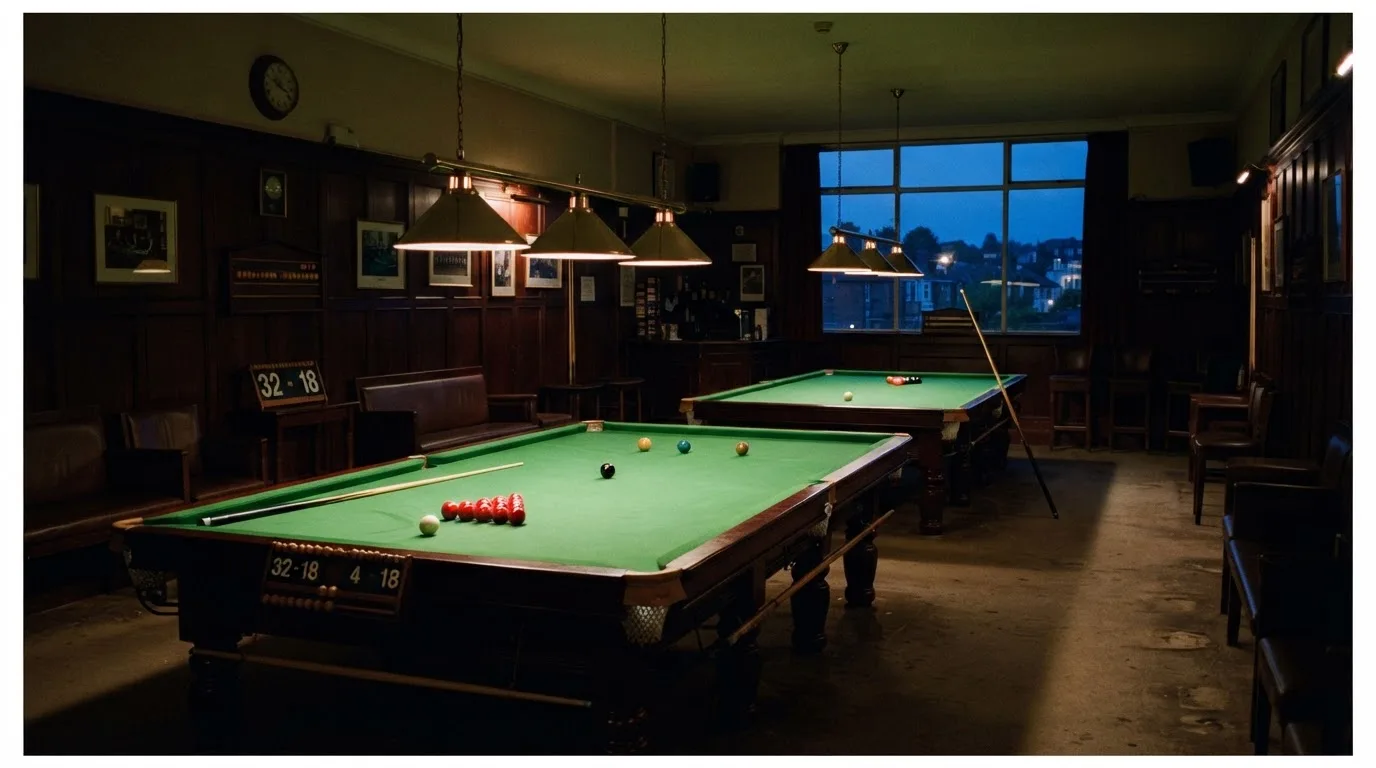
Snooker is a sport of small margins and long frames. Twenty-two balls sit on a 12 ft by 6 ft table – one white cue ball, fifteen reds worth one each, and six colours worth yellow 2, green 3, brown 4, blue 5, pink 6 and black 7. The maximum break of 147 is made by potting all fifteen reds with a black, then clearing the six colours in order, and it is rare enough to make each one a market event in its own right. Most professional matches are contested over best-of-seven, nine or eleven frames at Q Tour and ranking level, expanding to best-of-nineteen in the first round of the World Championship and best-of-thirty-five in the final.
The World Snooker Championship has been held at the Crucible Theatre in Sheffield since 1977, and the 2026 final went to a 18-17 finish between Wu Yize and Shaun Murphy (18 April to 4 May 2026), with the winner taking £500,000 from a £2,395,000 prize fund. Records at this level are made by repetition: Stephen Hendry and Ronnie O’Sullivan sit on seven modern-era world titles each, and Joe Davis won fifteen in a row between 1927 and 1946 in the sport’s amateur era. The governing bodies split the work cleanly: the WPBSA owns the professional rules and runs the professional tour; the IBSF governs the amateur game.
That shape – long frames, small table, two players, no clock – shapes the betting. Three things follow from how the sport is actually played.
First, every session is itself a betting event. A best-of-nineteen first-round World Championship match is contested over three sessions, and each session carries its own frame winner market and a half-time line. The session market is where the in-play product lives; the operator’s price moves frame by frame, and the patient bettor waits for a player 4-2 up with three frames left and a century break in the bag.
Second, the outright tournament market runs for weeks. The 2026 World Championship was played across seventeen days and the outright winner market stayed open through almost all of them, with the price on the favourite shortening through the first week and the price on long shots backing up as names dropped out. That long market life is part of why snooker sits next to horse racing on a British bookmaker’s site: the calendar is long, the events are scheduled, and the ante-post market is where a lot of the value talk lives.
Third, the player base is small and identifiable. About seventy-five professional tour card holders chase ranking points through a tour, and bookmakers’ traders know most of them by name. That knowledge is part of why snooker margins are not wider than the major-team-sports margins: with enough traders spending enough time on the form book, the price can be set with some precision even on unfamiliar players from the lower tours.
How UK snooker betting is regulated in 2026
Snooker betting in Great Britain sits inside the Gambling Act 2005 framework, and the whole commercial market is licensed by the Gambling Commission, a non-departmental public body sponsored by the Department for Culture, Media and Sport. The 2005 Act covers England, Scotland and Wales; Northern Ireland is outside the Act and runs on its own older regime, so a Great Britain licence does not reach customers in Belfast. Any brand taking remote bets from customers in Great Britain needs a Commission licence wherever the brand itself is based – sections 33 and 36 of the Act, as amended by the Gambling (Licensing and Advertising) Act 2014, are the relevant clauses. A Curaçao, Malta or Gibraltar authorisation is not a substitute; the licence test is consumption, not incorporation.
There is no state monopoly and no cap on the number of licences. The Commission’s public register lists every holder of an operating licence and can be searched by business name, trading name, domain or account number. The register is the whole test of whether a brand holds one, and readers should quote no count without their access date. The official register categories a bookmaker can hold are: remote general betting standard (real events), remote general betting standard (virtual events), remote general betting limited, remote pool betting and remote betting intermediary – the latter being the licence that covers betting exchanges.
There is no statutory list of permitted sports or markets on snooker. The bookmaker holds a licence for a category and offers markets under its own rules and the Licence Conditions and Codes of Practice. The categories listed above tell a reader what kind of betting the operator is licensed for; what markets it then runs inside that category is the operator’s commercial decision.
Financial spread betting on Spreadex – a category that takes in financial indices, FX, interest rates and commodities – is regulated by the Financial Conduct Authority under financial services law, not by the Commission. A separate fixed-odds Commission licence covers Spreadex’s sportsbook. Spread betting customers are told on the homepage that losses on the financial side can exceed deposits, which is a property of the product class rather than of any operator’s house rules; a fixed-odds punt on snooker frames does not carry that exposure.
The minimum age is 18. Since 7 May 2019 every GB-licensed remote operator has to verify a customer’s name, address and date of birth before the first deposit, whether or not the customer is using a free bet, a bonus or their own cash. That identity check rules out anonymous play at any licensed bookmaker; a customer who wants anonymity has to leave the licensed market.
Where responsibility sits
GAMSTOP is the national multi-operator online self-exclusion scheme, and a Commission licence condition since 31 March 2020: every online operator takes part. A self-exclusion can run for six months, one year, five years, or five years with auto-renewal, and after the minimum period a further seven years kicks in unless the customer asks GAMSTOP to lift it. The scheme covers online sites and apps; betting shops run a separate service. A customer wanting exclusion at a licensed operator should start there. Once excluded, the operator’s own responsible-gambling tools – deposit limits, time-outs, product blocks – are layered on top.
A financial vulnerability check has applied to licensed remote betting since 28 February 2025 under LCCP condition 3.4.4: when a customer’s deposits minus withdrawals exceed £150 in any rolling 30-day window, the operator runs a public-record check – bankruptcy, county court judgments, similar registers – and decides what further action to take. It is not an income check, not a credit-reference-agency check, and not a step on the path to a marketing offer. The affordability frame work that has been discussed in the press is a different animal: financial risk assessments, in the Commission’s staged plan announced in a Commission article of 7 July 2026, remain announced and staged with no confirmed start date. The honest framing is “announced, staged, no start date”, and the page uses that framing throughout.
Deposit limits moved in two stages. The first changes applied on 31 October 2025 under Remote Technical Standard 12, and a second phase is timetabled for 30 September 2026, though whether it is live on the day is not established. There is no state-set deposit ceiling for betting – the operator must offer a gross deposit limit on a fixed time frame, but the actual figure is the customer’s choice. A reader worried about their own betting should set their own limit on day one, before the first bonus is claimed.
Help exists. GamCare runs the National Gambling Helpline and a network of counsellors across Great Britain. GambleAware funds treatment and research. The NHS runs a network of gambling clinics, currently expanding region by region. Gamblers Anonymous runs mutual-help meetings. None of these are bookmaker-specific, and none of them require a customer to be in crisis to call.
What may be bet on, and on what terms
In-play snooker is offered by GB bookmakers and the controls are the operator’s licence conditions and customer-protection duties. There is no blanket statutory ban. A bookmaker can take an in-play bet during a frame, suspend the market for a foul, re-open it at a new price, and close it for a referee’s decision. Nothing in the Act forces that pattern on them; it is what a well-run trading team does anyway.
Betting exchanges sit under the betting intermediary licence and run back-and-lay markets. Smarkets in this comparison is one such intermediary. Exchange rates and rules are stated only from each exchange’s own terms; the framework here does not generalise across exchanges.
Bets on politics, TV shows and novelty markets are offered by GB bookmakers; no statutory prohibition was found. Esports are treated like any other sporting event under the remote general betting standard (real events) licence; virtual events are their own licence category. Off-course pool betting on horse or dog racing is a separate licence and duty – useful to know because the World Snooker Championship is run as fixed-odds at licensed operators, not as a pool.
There is no statutory cap on stake size in sports betting. Operators set their own maximum stakes and may restrict individual customers. A high-roller limit on snooker is negotiated with the operator, not extracted from the Act.
Bonuses, marketing and the 2026 cap
Bonuses are not banned, but the conditions on them tightened on 19 January 2026. Wagering requirements on bonuses are capped at 10x – meaning a £10 bonus can require no more than £100 of qualifying bets before the bonus and any winnings on it can be withdrawn. Mixed-product promotions, the “bet on football to get free spins” offers that chain two product types into one incentive, are banned. The cap applies to bonuses with a wagering condition; whether it catches free bets without one, and any cap on the money value of a bonus, are not established, and the page does not fill the gap.
Free bets and bet credits on the licensed market come with their own terms. Coral’s sports welcome offer for new Great Britain customers who deposit and place a qualifying bet of £20 at minimum odds of 2.0 (1/1) issues £40 of free bets within seven days and expires seven days after issue. Unibet’s terms carry the same structure: a £20 qualifying bet at minimum odds of 2.0 returns £40 of free bets, expiring within seven days, with the deposit required by debit card or instant bank transfer. BetMGM’s sports welcome offer is four £10 free bets issued on the same trigger condition (deposit and bet £10+ within seven days), two on football accumulators of four or more selections and two on sports multiples of two or more. VBet runs a smaller structure: a £10 free bet for a new, verified customer staking £10 or more on a first-ever losing bet. None of these is a match deposit in the casino sense; each is free bet credit, the stake is not paid back, and the wagering check is run on the bonus side.
The 2019 ban on credit cards for gambling in Great Britain is still in force under LCCP condition 6.1.2; it covers credit-card-funded payments through an e-wallet, not debit cards or bank-based payments. A reader without a debit card or bank account is excluded from most of the licensed remote market. Cryptocurrency is not banned at the operator level, but no Commission rule on crypto deposits has been published and the page describes crypto support qualitatively only from each operator’s own terms.
Betting advertising is not licensed by the Commission. It is policed by the ASA under the CAP Code (non-broadcast) and BCAP Code (broadcast), with the LCCP marketing conditions running alongside. CAP Code section 16: marketing must be socially responsible, must not be of strong appeal to under-18s, and no one who is or seems to be under 25 may be featured gambling or play a significant role in an advertisement (with an exception for marketing placed where a bet can be made directly). “Whistle-to-whistle” is an industry code, not law – betting advertisements are not shown on TV from five minutes before a live sporting event to five minutes after it, before the 9pm watershed, with horse and greyhound racing excluded. The Premier League clubs’ withdrawal of gambling sponsorship from the front of matchday shirts from the 2026/27 season is voluntary; sleeves and hoardings remain, and that is a club-level commercial decision rather than a regulatory one.
What players are not charged
Players pay no tax on betting winnings in Great Britain. That is general information and is not tax advice; a professional gambler should ask HMRC or an adviser. The General Betting Duty is the operator’s tax on gross profits, set at 15 % for most products including remote sports betting; from 1 April 2027 a 25 % rate applies to remote bets that are not on UK horse racing, in-person, pool or self-service betting terminal. Until that date the remote rate stays at 15 %, and whether operators pass any of that duty on through tighter odds is not established. The Commission’s statutory levy is a separate charge and not a tax in the same sense.
What an unlicensed site does not give the bettor
A bookmaker serving customers in Great Britain without a Commission licence is committing an offence under section 33 of the 2005 Act. The offence is aimed at the operator: on summary conviction, up to 51 weeks’ imprisonment, a level 5 fine, or both (six months’ imprisonment in Scotland). No offence aimed at the customer who simply bets on an unlicensed site was found in the framework. What the customer does lose is the protection: no GAMSTOP coverage, no Commission complaints route, no approved alternative dispute resolution, no British consumer redress if funds are withheld, no application of the 10x bonus cap, no £150 vulnerability check, no identity-verification framework that protects the customer as well as it inconveniences them. “Legal to use” is not the right frame – “without the protections of a licensed site” is.
Enforcement against unlicensed operators is disruption rather than blocking: cease-and-desist notices, search-engine referrals, work with registrars, hosts and payment providers. Court-order DNS blocking powers have been given, or are about to be given, to the Commission; writing that ISP blocking is in operation today overstates what is documented. A reader evaluating an unlicensed offer should know what is being given up before the first deposit is made.
Live snooker betting and the cash-out mechanic
In-play snooker is the bread and butter of the in-play product at most licensed operators. The market structure is the same as a pre-match price on the match winner, but the price is suspended and re-issued frame by frame. A player 4-1 up at the mid-session interval on a best-of-nine is a different proposition than a player 4-1 up at the start of the match, and the market moves accordingly.
Cash out is the operator’s product for closing a position before the bet has settled. The customer has a winning position – say, a bet on Judd Trump at 1.80 in a match he is now leading 5-2 – and the operator offers to buy the bet back at a price slightly below the current market value, locking in a profit before the match ends. The mechanic has limits: not every market is offered for cash out, the offered price is set by the operator’s trading desk and is not the same as the back-or-lay price on the exchange, and once the offer is accepted the bet is settled at that price, no matter what happens next.
888sport’s offer, as stated on its app page, includes pre-match and in-play betting, Cash Out, Bet Builder, racing streams, BetFinder form tools, a live bet feed and daily boosted odds. Most licensed UK bookmakers run a similar mix, with the cash-out coverage the variable. The honest framing: cash out is a tool for locking in a profit or cutting a loss, and like every other market feature it sits inside the operator’s margin. The offered cash-out price is not a free option – it has been priced to favour the operator.
Live streaming of snooker is rarer than live streaming of football or horse racing. Where it is offered, it is usually gated by a funded account or a recent qualifying bet. Most punters on snooker follow the action on broadcast television or through the WPBSA’s own platforms rather than through their bookmaker’s stream. A customer looking for live video of a match should not assume the bookmaker’s stream is the cheapest way to follow it.
Predictions, previews and the honesty test
A search for snooker odds is rarely a search for snooker odds alone. It is often a search with “predictions” or “tips” attached. What the licensed market offers is sometimes called “snooker betting tips” or “previews” – and the most honest framing of those pages is that they have no privileged information. A trader pricing the World Championship outright is reading the same form book and the same head-to-heads the tipster site is reading. The difference is what each is willing to put on the record.
A prediction is a probability statement about a future event that nobody knows. A tip is a recommendation to stake on that probability. Neither is a guarantee; markets priced at 1.50 are correctly priced only about 60 % of the time, and the punter betting on a 1.50 shot is paying a margin on top of that 60 %. Long-priced outsiders at 10.00 in an outright are accurately priced only about 10 % of the time, and the bettor taking them is paying a margin again. The information advantage a tipster offers, where one exists, is sharper pricing on a particular match; the more general “Ronnie to win” call is the kind of statement that nobody can verify and nobody can falsify until the tournament is over.
The page does not carry predictions and does not name favourites. The reader looking for a tip is being told to read the form book themselves, decide which side of the price their view sits on, and accept the margin for what it is. The price is the document; the prediction is a paragraph on top of it.
What the snooker calendar looks like through 2026
The 2026 World Snooker Championship ran from 18 April to 4 May 2026 at the Crucible, with Wu Yize beating Shaun Murphy 18-17 in the final. Beyond the World Championship, the calendar runs through the UK Championship at the York Barbican in late November and early December, the Masters at Alexandra Palace in January, the Players Championship and Tour Championship later in the spring, and a rolling schedule of ranking events and qualifiers between them. Each carries its own outright market, its own match-winner markets and its own session markets at licensed operators.
Tournaments with smaller fields and tighter formats – the Championship League, the Shoot Out, the Seniors events – carry fewer outright runners and therefore higher per-runner margins, sometimes 12 % to 15 % before allowing for any trader’s adjustment. The bigger ranking events and the World Championship itself carry tighter margins, reflecting more betting volume and more accurate pricing. The takeaway for a bettor shopping around is that the margin variation across tournaments is real; the bookmaker that quotes 1.85 on the World Championship final may quote 1.65 on a Q Tour match at the same pairing length, and the difference is at least partly the market, not the operator.
The professional tour schedule is published by the WPBSA. A reader planning an outright stake at the start of a ranking event can find the draw, the field, and the price on every runner at each licensed bookmaker in the space of an hour or so. The licensed market competes on price where it competes at all, and the snooker outright market is where it competes most visibly.
How to read the licensed operator landscape
Ten operators carry a Great Britain remote licence for sports betting, and the table below sets them side by side on what each holds, who runs it, and what its own terms say about the way a punter is treated. This is not a ranking and it is not a recommendation – no single brand is “the only” licensed one, and a place in a comparison is not a licence. The columns are matters the table can lay flat; the judgements live in the write-ups that follow it.
The licence column carries the Gambling Commission remote licence number and the licensee name as shown on the public register. The terms column is what each operator’s own terms say about snooker or about the wider way it deals with customers on this kind of bet. Where the operator’s terms do not cover the question, the cell carries the marker a reader understands to mean the data is not in the comparison; this is what that marker is for and it is not a comment on the brand’s quality.
| Brand | Gambling Commission licence and holder | What the operator’s own terms say on snooker betting |
|---|---|---|
| BetMGM | Remote licence 039198-R-319450-029; LeoVegas Gaming PLC | Sports welcome offer for new UK customers: deposit £10+ and place a sports bet within 7 days, get four £10 free bets (two football accas of 4+, two sports multiples of 2+), valid for 7 days, minimum odds and opt-in required. |
| Bar One Racing | Remote licence 056516-R-332750-007; Bar-One Racing Limited | Irish independent bookmaker, now BAR 1 Betting, with shops across Ireland and horse racing sponsorships at Dundalk, Fairyhouse, Navan, The Curragh, Curraheen Park and Cork. |
| QuinnBet | Remote licence 061011-R-335683-004; QuinnBet (Gibraltar) Limited | Best Odds Guaranteed on Irish and UK horse racing bets from 10:00am daily on singles, multiples and system bets; maximum benefit £150 per customer per race. |
| Coral | Remote licence 054743-R-330863-014; LC International Limited | Sports welcome offer: bet £20 to get £40 in free bets; qualifying bet at minimum odds 2.0, free bets issued within 7 days, expiring 7 days after issue; new GB customers, opt-in required. |
| Smarkets | Remote licence 039173-R-319366-011; Smarkets (Malta) Limited | UK open bank transfer deposits instant from £10 to £10,000; withdrawals processed within 6 hours from £10 to £100,000; debit-card deposits instant from £10 to £15,000. |
| VBet | Remote licence 044662-R-324273-022; SCGO Limited | Sports welcome offer: £10 free bet if a new, verified customer stakes £10+ on a first-ever bet that loses. |
| Unibet | Remote licence 045322-R-324275-019; Platinum Gaming Limited | Sports welcome offer: bet £20 to get £40 in free bets; qualifying bet at minimum odds 2.0, free bets expiring within 7 days; new GB customers via debit card or instant bank transfer. |
| 888sport | Remote licence 039028-R-319297-014; 888 UK Limited | Pre-match and in-play betting, Cash Out, Bet Builder, racing streams, BetFinder form tools, live bet feed and daily boosted odds. |
| Tote | Remote licence 054779-R-331321-008; TDCO Limited | Best Odds Guaranteed on UK and Irish horse racing from 8 AM on the day of the race, on single and multiple bets; not available on ante-post, tote or pari-mutuel bets. |
| Kwiff | Remote licence 044448-R-323408-017; Eaton Gate Gaming Limited | UK Gambling Commission licensed; described as a trademark operated by Spryme Ltd; app has a 17+ age rating on the App Store. |
A licensed set is a starting point, not a shortlist. Several of these brands can run under one licensee: Ladbrokes and Coral under LC International, Paddy Power and Betfair under a Flutter group licence, and so on. That is a corporate fact, not a customer one – each brand’s site is its own product with its own terms, and the column above reflects each brand as the punter meets it.
BetMGM
BetMGM arrives in the comparison carrying LeoVegas Gaming PLC’s licence behind it, and its welcome offer is built around four £10 free bets unlocked by a £10 deposit and qualifying bet within seven days. Two of the free bets are tied to football accas of four or more selections; two are tied to sports multiples of two or more. The qualifier’s minimum odds are stated but not printed on the App Store listing – a reader has to check the BetMGM promotions page before the bet is placed. Beyond the welcome offer, the product is the standard sportsbook-plus-casino bundle, and the snooker offering sits inside the fixed-odds book.
The verdict for a snooker punter is: the brand’s sporting strength is in American leagues and the football acca product, and the free bet structure follows that focus. A punter whose snooker interest is occasional rather than central will find BetMGM competitive on the major ranking events; the welcome offer is less snooker-friendly than a flat £20 in free bets would be, because two of the four bets are tied to football.
Bar One Racing
Bar One Racing rebranded as BAR 1 Betting in 2025 and presents itself as an Irish independent bookmaker with shops across Ireland and horse racing sponsorships at Dundalk, Fairyhouse, Navan, The Curragh, Curraheen Park and Cork. The sportsbook on its UK-facing site covers the same GAA, horse racing and football markets that Irish punters expect, and snooker sits inside the fixed-odds book when the calendar brings the bigger events.
The verdict here is plain: BAR 1 Betting is a smaller brand than its peers, with a narrower in-play product and a snooker offer that reflects the volume of business its traders can lay. The licensed position and the GAMSTOP membership are the same as every other entry on the table; the differentiator is the size of the product. A punter whose interest in snooker is the World Championship and the UK Championship will find the price competitive at those points, and thin between them.
QuinnBet
QuinnBet sits behind its Gibraltar parent company’s licence and runs the Best Odds Guaranteed offer on Irish and UK horse racing from 10:00am each day on singles, multiples and system bets, capped at £150 of benefit per customer per race. That offer is the brand’s signature; it does not extend to snooker. The licensed bookmaker quotes match-winner prices and outrights on the snooker tour the same way every other licensed bookmaker does, and the margin on those markets is what it is.
The verdict on QuinnBet for a snooker punter: the horse racing structure is the headline product and it competes on that strength; the snooker product is competent without being distinctive. A punter weighing operators by snooker alone has no specific reason to choose QuinnBet; a punter laying bets on horse racing alongside the snooker bet is paying no cost for having a Best Odds Guaranteed offer on the racing side of the same wallet.
Coral
Coral is one of the larger GB-licensed sportsbooks, sitting behind LC International Limited’s licence alongside Ladbrokes in the Entain group structure. Its sports welcome offer is the same £40-for-£20 structure as Unibet: a qualifying bet of £20 at minimum odds of 2.0 returns £40 of free bets within seven days, expiring seven days after issue. Coral’s snooker offering inside that envelope covers the World Championship, UK Championship, Masters and the major ranking events with match-winner, frame, session and outright markets.
The verdict on Coral is straightforward: a large, mainstream sportsbook with a snooker book large enough to sustain in-play markets through the bigger tournaments. The free bets are time-limited (seven days, twice over) and the stake is not returned on a winning free bet; that is the standard snooker-punter’s cost and the reader should treat it as such. Coral is a mainstream choice for the multi-sport bettor who values a single-wallet account over specialist snooker features.
Smarkets
Smarkets runs under a betting intermediary licence, which makes it a betting exchange rather than a traditional sportsbook. The licence category is “remote betting intermediary” rather than “remote general betting standard (real events)”, and the public register reflects that distinction. The Smarkets UK deposit and withdrawal experience is the brand’s signature: instant deposits from £10 to £10,000 by open bank transfer, withdrawals processed within six hours from £10 to £100,000, debit-card deposits instant from £10 to £15,000.
The verdict for a snooker punter is: the exchange model means the customer is laying bets against other customers, with Smarkets taking a commission on net winnings. The margin is set by the back-and-lay interaction, not by the operator’s trading desk. For a snooker market with enough interest – World Championship match winner, frame winner on a high-profile match – the exchange price can run tighter than the bookmaker price. For a long-shot match between tour rookies, the bookmaker’s price is often the only one quoted. The honest framing is that an exchange complements a bookmaker account for the markets that justify it, and Smarkets is a place to add depth on those markets rather than to replace the rest of the wallet.
VBet
VBet sits behind SCGO Limited’s licence and runs a sports welcome offer built around a £10 free bet for a new, verified customer who stakes £10 or more on a first-ever bet that loses. That structure is interesting because it refunds the qualifying stake as a free bet on a loss, which is “risk-free” in the marketing language and a “free bet on a losing first bet” in plain English. The stake is not returned on a winning free bet.
The verdict for a snooker punter on VBet: a smaller brand than Coral or Unibet, with a snooker book that covers the major ranking events and a margin on those markets that runs wider than the market leaders on the long shot end. The welcome structure is more cautious than Coral or Unibet, and the customer has to lose the qualifying bet to extract value from it – which is a slower way to build a wallet than a matched deposit would be. VBet provides a solid alternative for the punter building a multi-operator portfolio, though it lacks the depth of the industry leaders for dedicated snooker trading.
Unibet
Unibet has operated since 1999 and sits behind Platinum Gaming Limited’s Gibraltar licence on its UK site. The sports welcome offer is the £40-for-£20 free bet structure: qualifying bet of £20 at minimum odds 2.0 returns £40 in free bets, expiring within seven days, funded by debit card or instant bank transfer. The product on snooker covers match winners, frame betting, session betting and outrights through the World Championship and the rest of the ranking calendar.
The verdict on Unibet: a global brand with a snooker offering large enough to support in-play markets on the bigger tournaments. The deposit-funded welcome offer’s payment-method restriction (debit card or instant bank transfer, not e-wallet) is the kind of detail a punter reads in the small print before the bet is placed. Unibet remains a strong contender for those who already use its European-wide platform or who prefer a globally recognised bookmaker.
888sport
888sport sits behind 888 UK Limited’s licence and the brand’s app page lists pre-match and in-play betting, Cash Out, Bet Builder, racing streams, BetFinder form tools, a live bet feed and daily boosted odds. The snooker offering is layered into that product, with the World Championship, the UK Championship and the bigger ranking events driving the volume. The brand’s wider gaming heritage is in the casino vertical; the sportsbook is the smaller side of the business by revenue, though it is the part that takes snooker bets.
The verdict for a snooker punter on 888sport is: a competent mainstream sportsbook with an in-play product large enough to support frame-by-frame snooker trading. The Bet Builder feature, marketed strongly, is a same-game multi product that runs on snooker with certain match-level selections; punters accustomed to football bet builders should test the snooker equivalent before staking. 888sport serves the 888 customer base well, though it lacks the specialized tools of a dedicated snooker bookmaker.
Tote
Tote sits behind TDCO Limited’s licence. The brand’s heritage is the pool-betting product on British horse racing, which still operates under a separate pool betting licence category. The remote general betting standard (real events) licence covers the fixed-odds sportsbook, where snooker sits among the other sports. The brand’s Best Odds Guaranteed offer on UK and Irish horse racing from 8 AM on the day of the race, on single and multiple bets, with no application to ante-post, tote or pari-mutuel bets, is in the racing vertical rather than the snooker one.
The verdict on Tote for a snooker punter is that the brand is identified most clearly with its pool-betting heritage. The fixed-odds sportsbook is competent and the snooker offering sits inside that book the same way it would at any mainstream operator. A punter whose interest is exclusively snooker has no specific reason to choose Tote; a punter with a parallel interest in horse racing pools finds a brand that has run those pools for decades.
Kwiff
Kwiff is licensed by the Gambling Commission through Eaton Gate Gaming Limited, and the brand describes itself as a trademark operated by Spryme Ltd. The brand’s distinguishing product feature is “supercharged” odds – its own marketing term for a randomised odds uplift on selected markets – and the app carries a 17+ age rating on the App Store. The snooker offering is layered into the wider sportsbook, with match-winner and outright markets on the bigger ranking events.
The verdict for a snooker punter on Kwiff: the brand’s signature feature is the odds-uplift mechanic, and a punter who values that mechanic above tight margins will find a place for Kwiff in the wallet. The opposite punter – one whose priority is the tightest margin on the World Championship outright – has no reason to choose Kwiff on snooker alone. The licensed position is identical to every other entry on the table; the differentiator is the product feature, and the punter should know which side of that trade they sit on before signing up.
Bonuses, free bets and what they actually cost
A licensed bookmaker’s welcome offer is a marketing tool, and the way to read it is the way to read any marketing tool – with the small print on the desk. Three numbers tell the reader most of what they need: the qualifying bet’s minimum odds, the free bet’s expiry window, and any cap on the free bet’s winnings.
Coral and Unibet both run the £40-for-£20 structure, which is the market’s most common package for a Great Britain-licensed sportsbook. A £20 qualifying bet at minimum odds of 2.0 returns £40 in free bets within seven days; the free bets expire seven days after issue. A punter staking on the World Championship outright market would need a runner at minimum odds of 2.0 to qualify, and the £40 free bet credit would need to be used within the seven-day window on selections the punter would otherwise avoid. The stake is not returned on a winning free bet – a £40 free bet at 5.00 returns £200, with £200 of profit over the £40 credit, but the £40 itself is not in that £200. The reader’s mental model should be “free bet is half-stake” rather than “free bet is free money”, and that is before the book’s margin sits on the free bet’s selection too.
BetMGM’s four £10 free bets, two tied to football accas of four or more selections and two to sports multiples of two or more, are a tighter structure. The qualifying bet of £10+ within seven days triggers the package. Football accas of four or more legs run into the multiplied-odds calculation, and the free bet stake is not returned. A punter whose snooker bets do not bleed into football multi betting has no cause to choose that structure over the Coral or Unibet flat £40.
VBet’s £10 free bet on a losing first bet is a different mechanic. The customer stakes £10 of their own money; if the bet loses, VBet issues a £10 free bet. The break-even analysis is straightforward: at odds of evens or longer, the customer’s first bet has a positive expected value at the typical 90 %+ payout share, so the free bet refund on a loss slightly favours the customer; at odds shorter than evens, the structure starts to favour the bookmaker. The customer should make the qualifying selection themselves rather than chase the welcome offer’s marketing line.
The wagering cap from 19 January 2026 applies to bonuses with a wagering condition. Whether it catches free bets with no such condition is not established by the framework; the licensed operators in this comparison all run free-bet welcome offers without a wagering multiple on the free bet itself. The qualifying-bet requirement is a deposit-and-bet trigger, not a wagering multiple, and falls outside the 10x cap. A reader chasing the highest bonus should always ask whether the offer they are looking at has a wagering multiple, because that is the threshold that matters most.
QuinnBet’s Best Odds Guaranteed on horse racing and Tote’s Best Odds Guaranteed on horse racing are best-odds-guaranteed offers, not welcome bonuses. Both apply from a stated time on race day and cap the benefit at a stated maximum (QuinnBet at £150 per customer per race, Tote subject to the standard SP-plus-mechanism rules). The offer does not apply to ante-post bets; a punter who places a World Championship outright in October and waits until the final in May is on an ante-post bet, and the offer does not catch it. That is a useful ceiling to remember: BOG protects the punter on the day of the race, on the racecard they bet into, and the benefit is policed at the cap.
The arithmetic in plain English
A worked example, using the formula that the page’s prescribed calculation sets out. The reader is offered a two-way snooker match winner market at decimal odds of 1.90 on each runner. The implied probability on each side is 1 ÷ 1.90, which is roughly 52.6 %; the two probabilities sum to about 105.3 %, and the payout share for a unit bet is 1 ÷ 1.0526, which works out to roughly 95 %. The margin is 1 minus the payout share, which is approximately 5 %. So every £1 staked on the market returns 95p in aggregate over the long run, with the bookmaker keeping about 5p of every £1 staked. The band of the typical margin on snooker match winner markets is roughly 2 % to 8 % at licensed operators, with the tighter end reserved for high-volume events (the World Championship, the UK Championship, the Masters) and the looser end running on lower-tour and unfamiliar matchups.
A consequence worth stating plainly to a single reader: the 5 % band is what a typical licensed operator charges the punter on a steady volume of betting at 1.90 match winners. Over a season of, say, 200 single-stake bets of £10 at 1.90, that 5 % margin extracts roughly £100 of the £2,000 staked – £100 of “expected cost” before the punter’s accuracy on the form book is considered. The punter has to win enough bets to clear that £100 before any positive return is realised, and the punter’s accuracy on a market priced at 1.90 / 1.90 has to sit above 52.6 % to break even before the margin. That is a much harder test than betting at 1.50 favourites, where the implied probability is 67 % – the punter has to be right more often, but the margin bite per bet is the same in proportional terms.
A 1.90 / 1.90 market is an illustrative figure; live odds on the World Championship final or any other event will move on actual participant pricing, and the page does not print a price that is not in the inputs. The condition on the band is the band itself: roughly 2 % to 8 % on snooker match winner markets, tighter on the major ranking events and looser on lower-tour fixtures.
Crypto, payment methods and what the licensed market accepts
Cryptocurrency is not banned at the operator level in Great Britain, and no Commission rule on crypto deposits has been published. A reader looking to deposit bitcoin at a licensed operator will find that most licensed operators do not accept it directly; the payment-method menu at the major brands runs through debit cards, bank transfers and a small set of e-wallets. Smarkets accepts open bank transfer deposits from £10 to £10,000 instantly, the fastest settlement brand in the comparison. None of the operators in the table accepts cryptocurrency for sports betting under its own terms.
The credit card ban under LCCP condition 6.1.2 covers credit-card-funded e-wallet deposits too. A reader without a debit card or a UK bank account is excluded from most of the licensed remote market, and the licensed product has no anonymous onboarding path: identity verification runs before the first deposit.
The offshore, no-KYC product exists outside this comparison. Operating without a GB licence costs the bettor the protections of the licensed market, and the licensed brands in the table above all run KYC and source-of-funds checks at the operator level. A reader weighing crypto deposit support against the protections of the licensed market is making a trade-off the framework does not give them language to dress up.
The 2026 snooker calendar, and how to plan a tournament outright bet
Outright tournament betting on snooker runs across the calendar, with the World Championship in late April and early May, the UK Championship in late November and early December, the Masters in January, and the rolling ranking events filling the rest of the year. Each event carries an outright winner market from the moment the field is confirmed, and the price on each runner shortens through the early rounds as the field narrows.
The long market life is the market’s defining feature. An ante-post bet placed in October on the World Championship in April-May is exposed to form swings, injuries, withdrawals and the long result variance of a 32-player draw. A bettor expecting the favourite to drift because of form worries over the winter is making a market-timing call that the betting exchange’s lay price can express more cleanly than any bookmaker’s ante-post quote. A bettor expecting the favourite to shorten through the early rounds is making the opposite call.
The licensed operators in this comparison carry similar outright markets on the major ranking events, and the prices tend to converge within a tick or two once the field is announced. The window where prices diverge most is in the days after a high-profile shock result, when the surviving favourites shorten and the long shots back up. That window is short; a reader planning a tournament bet should know when it opens and closes, because the price at which a runner can be backed is the price at which a runner can be backed.
How a bet on snooker is settled
A pre-match bet on the match winner is settled on the official result, including any walkover, disqualification or concession. A frame-by-frame bet is settled on the official score after the frame, and a session bet is settled on the official score after the session. The bookmaker’s rules (in the LCCP and in the operator’s own terms) define what counts as an official result; in the absence of a contrary rule the official WPBSA ruling stands.
In-play bets during a frame are settled on the official outcome of the frame. An in-play bet placed during a frame is normally settled on the result at the end of that frame, with operator rules stating what happens if the bet is placed after a frame has ended and the market had not yet been suspended. Most operators carry the position across to the next frame and settle at the next valid official result; the reader should read the operator’s in-play rules before staking, because the in-play product’s quirks sit in the small print.
Ante-post bets are settled on the official outcome of the tournament, with non-runner rules applying. A bet on a player who withdraws before their first match is typically settled as a losing bet, with the stake lost; that is the default rule and a withdrawal protection product is an opt-in feature at most operators.
A Rule 4 deduction applies when a runner in a market is withdrawn and a new market is formed around the remaining field. Rule 4 is a bookmaker rule, not a statute, and the deduction is calculated from a table that runs from a small percentage for a withdrawn favourite up to 90 % for a withdrawn outsider. The deduction reduces the odds on the remaining runners; a reader faced with a Rule 4 notice should read the deduction’s percentage before deciding whether to let the bet stand.
The limits and the practical ceiling
There is no statutory cap on stake size in sports betting. Operators set their own maximum stakes and may restrict individual customers; a high-roller account on snooker is negotiated, not extracted from the Act. The financial vulnerability check at £150 of net deposits in a rolling 30 days is a flag at which the operator runs further checks, not a stake ceiling. The affordability frame work, with financial risk assessments, remains announced, staged and without a confirmed start date, and the page writes that as the honest framing.
Deposit limits are the customer’s choice, not the state’s. A punter worried about their own betting can set a gross deposit limit on a fixed time frame at the licensed operator; the limit is enforced across the operator’s products. Setting the limit on day one, before any welcome offer is claimed, is the cheapest time to do it.
What to do when the betting stops being fun
The honest framing here is that the licensed market carries the responsibility tools because problem gambling is a recognised harm in Great Britain, and the Commission has built the framework around the operator’s licence conditions rather than around state-imposed caps. A punter who feels the betting is becoming a problem has several routes: setting a deposit limit on the operator’s site, taking a time-out, registering with GAMSTOP for a six-month, one-year or five-year self-exclusion, contacting GamCare’s National Gambling Helpline, or speaking to a GP about referral to an NHS gambling clinic.
None of these routes is a hard line: GAMSTOP’s six-month exclusion stays in place for a further seven years unless the customer asks for it to be lifted, and the NHS gambling clinics operate a stepped-care model. But each is a recognised path, and the licensed operators in this comparison carry the entry points to all of them. A punters seeking help first should contact GamCare; a punters seeking self-exclusion first should register with GAMSTOP.
Quick answer
Snooker betting sits inside the GB-licensed sportsbook market the same way any other sport does. The licensed operators carry match-winner, frame, session and outright markets on the major ranking events, with margins typically running from 2 % to 8 %; the World Championship, UK Championship and Masters carry the tightest books, lower-tier events the loosest. The bookmaker’s margin is the gap between the price and the “true” odds, and a 1.90 / 1.90 market has roughly a 95 % payout share and a 5 % margin. Welcome bonuses come with minimum-odds qualifiers, free-bet stake-not-returned rules and seven-day expiry windows – read the small print before the first bet. Identity verification runs before the first deposit, credit cards are banned, and GAMSTOP covers every licensed remote operator. The unlicensed market is not a substitute; it does not give the protections the licensed market is built around.
Frequently asked questions
How do you bet on snooker?
Pick a licensed UK bookmaker carrying a Gambling Commission remote licence, complete identity verification before the first deposit (name, address and date of birth), fund the account by debit card, bank transfer or an accepted e-wallet, and place a bet on one of the available snooker markets: match winner on a single fixture, frame winner on an in-play market, session winner on a multi-session match, or outright tournament winner on the World Championship, UK Championship or Masters. The decimal odds shown are the price that multiplies the stake into the total return. Verify the licence on the Commission’s public register before the first deposit.
Can you bet on snooker in Great Britain?
Yes. There is no statutory prohibition on betting on snooker in Great Britain and no statutory list of permitted sports; the Gambling Act 2005 framework covers all licensed betting through the Gambling Commission. An operator taking remote bets from customers in Great Britain needs a Commission licence wherever it is based, and credit cards are banned for gambling under LCCP condition 6.1.2. Betting on an unlicensed offshore site is not a regulated activity and the protection framework – GAMSTOP, bonus cap, dispute resolution – does not apply.
How can it be checked that a bookmaker holds a Gambling Commission licence?
Use the Commission’s public register, searchable by business name, trading name, domain or account number at the Commission’s website. A licensed brand will return an active operating licence entry, the licensee name, the licence number, the licence category (remote general betting standard real events, remote betting intermediary, remote pool betting or one of the others) and the registered domain. No entry, an expired entry or a mismatch between the trading name and the registered domain is the signal that the brand is not licensed for Great Britain. Each row in the operator table above carries the licence number and licensee name as shown on the register.
How is the return on a bet worked out from the stake and the odds?
For a single bet, the return is the stake multiplied by the decimal odds. A £10 stake at 3.50 returns £35, with £25 of profit over the £10 stake. For a combination bet (a double, treble or accumulator), the odds of each leg multiply together; a £10 treble at 2.00, 3.00 and 4.00 has combined odds of 24.00, returning £240 on a winner, with £230 of profit. Each-way betting doubles the stake because it covers win and place, and the place portion pays at a fraction (typically a quarter or a fifth) of the win odds. Free bet stakes are not returned on a winning free bet.
What is the bookmaker’s margin and how can it be seen in the odds?
The margin is the difference between the published price and the “true” odds; it is also called the overround. For a single market the implied probability of each outcome is 1 divided by the decimal odds, and the implied probabilities of all outcomes sum to more than 100 %; the gap between that sum and 100 % is the margin (alternatively, the payout share – what bettors receive on aggregate per unit staked – is 1 minus the margin). A 1.90 / 1.90 two-way market has implied probabilities of roughly 52.6 % each, summing to 105.3 %, a payout share of about 95 % and a margin of roughly 5 %. The margin is what the bookmaker keeps, on average, per unit bet on the market.
How do fractional odds such as 5/1 convert to decimal odds such as 6.00?
For a fractional price written a/b, the decimal equivalent is a divided by b plus 1. So 5/1 becomes 6.00, 11/4 becomes 11 ÷ 4 plus 1 = 3.75, and evens 1/1 becomes 2.00. The fractional “10/1” would be 11.00 in decimals, “10/3” would be roughly 4.33 and “5/2” would be 3.50. Fractional odds are still the everyday currency on British shop windows and racecourses; decimal odds are standard on remote sportsbooks. The conversion is mechanical and is the same whichever way the reader prefers to write the price.
Tennis, darts & cue sports – tenniscourttips.com
Content created by the «tenniscourttips.com» team
