
Where the high-roller actually finds a counter: ten UK-licensed bookmakers, weighed on the rules that decide a big bet
 Available in US
A “high stakes” punter, in plain language, is anyone whose bet size would move the conversation at the counter — a few hundred pounds on a single Premier League game, four-figure lays on the betting exchange, an each-way flutter that runs into the thousands on the Cheltenham card. Most bookmakers want that custom and compete for it; the same bookmakers are also the ones who reserve the right to limit, restrict or simply decline a bet they do not like. Knowing which is which, and which side of the rule book the punter is standing on, is the whole job of this page.
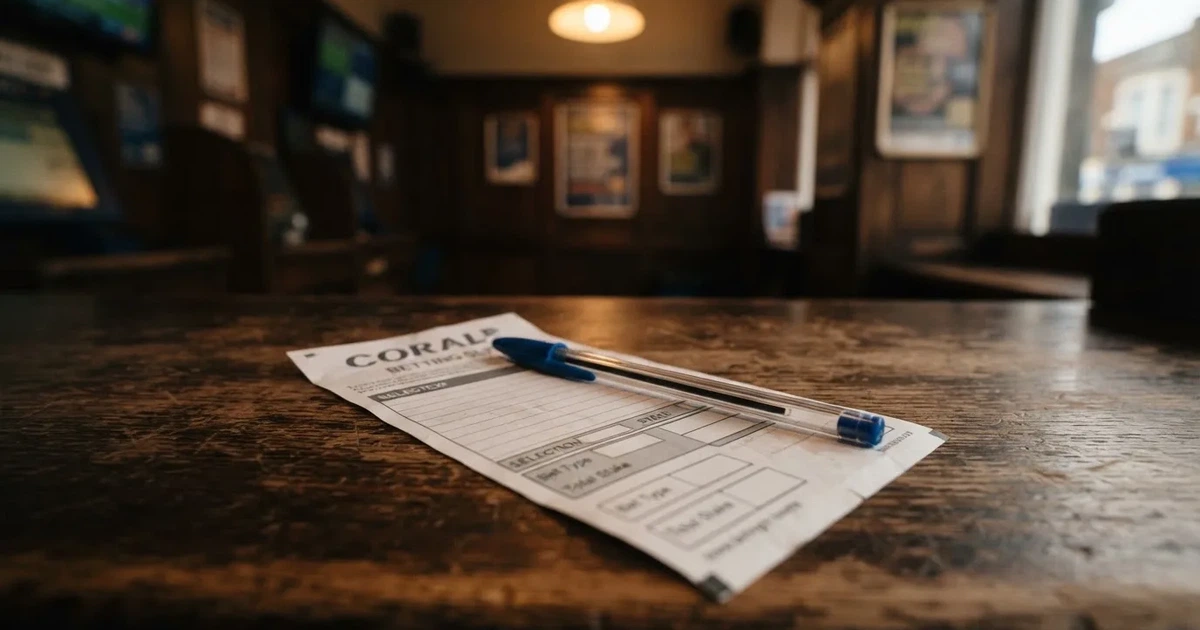
As of 30 October 2026, every licence line and every operator claim below was checked against the Gambling Commission’s public register.
Statute and jurisdiction: who is allowed to take your money
The framework that governs a UK punter’s counter is the Gambling Act 2005, and the body that runs it is the Gambling Commission (UKGC), a non-departmental public body sponsored by the Department for Culture, Media and Sport. The Act covers Great Britain — England, Scotland and Wales. Northern Ireland sits outside it under older legislation, so the right phrase is “Great Britain licence” or “GB-licensed”, and any bookmaker that claims to be “UK-licensed” by virtue of a GB licence is making a slightly looser statement than the statute allows.

Since the Gambling (Licensing and Advertising) Act 2014, an operator whose remote facilities are used in Great Britain needs a Commission licence wherever the operator itself is based. Sections 33 and 36 of the 2005 Act, as amended, are the relevant clauses; a Curaçao, Maltese or Gibraltar licence is not a substitute. There is no state monopoly and no statutory cap on the number of licences — the test is that the operator holds one, not that the regulator has approved a quota.
The Commission’s public register is the whole test of who holds a licence. It can be searched by business name, trading name, domain or account number, and it is the document a punter actually checks before sending a serious sum to a brand they have not used before. It is worth saying plainly: the licence number on a betting site’s footer is a claim, the register is the proof, and any site that makes the number hard to find is making a different kind of claim about how it wants to be treated.
The categories that appear on the register, and that matter for this page, are:
- Remote general betting standard (real events) — the licence that covers pre-match and in-play sports betting on actual fixtures. Every bookmaker reviewed below holds this category.
- Remote general betting standard (virtual events) — a separate category for computer-generated events; useful to know it exists, less useful for a high-stakes punter.
- Remote pool betting — the off-course pool product on horse and dog racing, where the dividend is set after the race.
- Remote betting intermediary — the licence a betting exchange runs under; Betfair Exchange holds this one in addition to its sportsbook.
What may be bet on: there is no statutory list of permitted markets. An operator holds a licence for a category and offers markets under its own rules plus the Licence Conditions and Codes of Practice (LCCP). In-play betting is offered by GB bookmakers and the controls are the operator’s licence conditions, not a statute. Esports are treated like any other event; bets on politics, TV outcomes and novelty markets are offered by GB bookmakers and no statutory prohibition was found. There is no statutory cap on stakes in sports betting — operators set their own maximum stakes and may restrict customers, and that combination is the high-stakes punter’s real environment.
Spread betting deserves its own note because it sits on a different rule book. Spreadex, the only firm in this comparison that runs the product, is regulated by the Financial Conduct Authority for spread betting and by the Gambling Commission for fixed-odds betting. Spread betting losses can exceed the deposit — it is the firm’s own disclosure, and it is the single most important sentence a punter reads before opening that account.
The minimum age is 18 everywhere in scope, and identity is checked before a customer can deposit or gamble. The check has been there since 7 May 2019, and it covers free bets and bonus credit, not just cash stakes. There is no anonymous play at a licensed site. That is the price of the consumer protections on the other side of the same wall, and a punter weighing an offshore book against a GB one is weighing exactly that trade.
Safer gambling and the rules that travel with a stake
The set of player-protection rules a GB bookmaker operates under is long, and a high-stakes punter feels more of them than the small punter does — because the protections scale with the spend.

GAMSTOP is the national multi-operator online self-exclusion scheme and a mandatory licence condition for online operators since 31 March 2020. Self-exclusion periods are six months, one year, five years, or five years with auto-renewal, and after the minimum period the exclusion stays in place for a further seven years unless the customer asks GAMSTOP to remove it. It covers online sites and apps; betting shops run a separate service. For a high-stakes punter who has hit a wall, GAMSTOP is the nuclear option — and a bookmaker who makes opting out easy is a bookmaker the punter should think twice about.
The financial vulnerability check (LCCP condition 3.4.4, in force since 30 August 2024) applies to licensed remote betting when a customer’s deposits minus withdrawals exceed £150 in a rolling 30 days. The threshold was lowered from a higher number on 28 February 2025. The check is a public-record search — bankruptcy, county-court judgement, similar — not an income check and not a credit-reference check. A punter who routinely runs through £150 net in a month can expect to be asked questions, and the answers feed the operator’s duty of care.
Financial risk assessments — the “affordability checks” the press writes up — sit on a separate track. The Commission published its staged plan in an article of 7 July 2026; no start date has been set. The honest phrasing is “announced, staged, no start date”, and the page keeps that phrase rather than guess when it lands.
Deposit limits are part of the same architecture. The first changes under the Remote Technical Standards (RTS 12) have applied since 31 October 2025; a second phase was postponed to 30 September 2026 and whether it is live is not established. The point worth taking into a high-stakes session is that operators must offer a gross deposit limit on a fixed time frame, and the customer’s choice sits inside that framework. There is no state-set deposit or loss ceiling — limits are the customer’s own.
Help lines sit alongside the rules. GamCare runs the National Gambling Helpline; GambleAware funds treatment and research; the NHS gambling clinics take referrals; Gamblers Anonymous runs meetings in person and online. None of these is a substitute for the others, and a high-stakes punter with a problem does better reaching for any one of them than for none.
Payments: cards, wallets and the banned list
The credit-card ban for gambling in Great Britain has been in force since 14 April 2020 under LCCP condition 6.1.2. It covers credit-card-funded payments made through an e-wallet as well as direct credit-card payments, so routing a credit card through PayPal does not get around it. Debit cards and bank-based payments are not covered by the ban and remain the standard way GB punters fund a bookmaker account.
Identity is checked before the first deposit, so the days of funding an account and betting before anyone asks who you are are over at any licensed bookmaker. Source-of-funds questions at higher spend are normal under the money-laundering rules, and a punter who plans to move four-figure sums regularly should expect to be asked where the money comes from. A bookmaker’s right to ask is also a punter’s right to a paper trail if anything goes wrong.
There is no state list of permitted payment methods at licensed operators, no British named-account rule for betting, and no statutory rule either way on cryptocurrency deposits. The only thing that can be said with certainty is that licensed operators describe payments in their own terms, and a high-stakes punter reads those terms before sending a serious sum. A punter who plans to move money through anything more exotic than a debit card should expect the bookmaker to ask why.
Marketing, bonuses and the rules the marketing team has to play by
Advertising for gambling is not licensed by the Commission. It runs through the CAP Code for non-broadcast and the BCAP Code for broadcast, enforced by the Advertising Standards Authority (ASA), sitting alongside the LCCP’s marketing conditions. The CAP Code, section 16, says marketing must be socially responsible, must not be of strong appeal to under-18s, and no one who is or seems to be under 25 may be featured gambling or play a significant role, with an exception for marketing placed where a bet can be made directly. That rule is about who can appear in the advertisement; it is not about who can place the bet.
The promotion rules that hit the punter’s wallet most directly took force on 19 January 2026. Wagering requirements on bonuses are capped at 10x: a £10 bonus with a 50x requirement previously needed £500 of qualifying bets; under the cap, no bonus requires more than £100 of qualifying bets to clear. Mixed-product promotions — an offer that ties betting to casino, bingo, lottery or another product, the classic “bet on football to get free spins” shape — are banned outright. Whether the cap applies to free bets with no wagering condition, and whether there is a cap on the money value of a bonus, are not established; the rule as written speaks to bonuses with a wagering condition, and a free bet that pays no stake back is a different mechanism.
“Whistle-to-whistle” — the absence of betting ads on TV from five minutes before a live sporting event to five minutes after it, before the 9pm watershed — is an industry code, not law, and it has been in place since 1 August 2019. Horse and greyhound racing are excluded. The Premier League’s withdrawal of gambling sponsorship from the front of matchday shirts (from the 2026/27 season; sleeves and hoardings remain) is voluntary, not statute. None of this changes a high-stakes punter’s life at the betting slip, but it is the backdrop to the welcome offers reviewed below, and a punter comparing operators is comparing offers that sit inside the same rule book.
One rule that applies to this page: never print a promo code. The page describes what an offer is worth; how it is claimed is the operator’s own page.
Tax: who pays, and what changes in April
The punter pays no tax on betting winnings in Great Britain. That is general information, not tax advice; a professional gambler should ask HMRC or an adviser, because the line between “punter” and “trade” is the line between “no tax” and “self-employment income”.
General Betting Duty is the operator’s tax on gross profits from general (fixed-odds) betting. The current rate is 15%. From 1 April 2027 a new remote betting rate of 25% applies within General Betting Duty, while remote bets on UK horse racing, bets on self-service betting terminals in licensed premises, pool betting and in-person betting stay at 15%. The change was set out in an HM Government policy paper of 26 November 2025. Until 1 April 2027 the remote rate stays at 15%. Whether operators pass duty on through shorter odds is not established — and the page does not pretend otherwise. Spread betting has its own rates (3% on financial, 10% on other), which is one of the reasons it sits on its own licence. The Commission’s statutory levy is a separate charge on operators and is not a tax on the punter.
The offshore shelf: what an unlicensed book does not give a punter
A GB licence is compulsory at the point of consumption. Providing gambling facilities in Great Britain without the licence the Act requires is an offence under section 33 of the Gambling Act 2005, aimed at the operator — on summary conviction up to 51 weeks’ imprisonment, a fine up to level 5, or both; six months in Scotland. The offence targets the firm, not the punter: no offence aimed at a customer who merely bets on an unlicensed site was found.
What the punter loses by betting with an unlicensed operator is the consumer-protection stack that comes with a GB licence. There is no GAMSTOP coverage, no Commission complaints route, no approved alternative dispute resolution body, and no British consumer redress if funds are withheld. The 10x bonus cap and the £150 vulnerability check do not apply; the credit-card ban does not apply; the safer-gambling duties do not apply. If the firm decides not to pay out, the punter’s route is whatever private law remedy exists, not the Commission’s complaints process.
Enforcement is disruption, not blocking. The Commission issues cease-and-desist notices, refers sites to search engines, works with registrars, hosts and payment providers, and has been given — or is about to receive — court-order DNS blocking powers. ISP blocking is not in operation as a standing arrangement. The honest framing is that licensed means checks, limits, GAMSTOP, bonus cap and approved complaints, but also verification before the first bet; unlicensed means none of those protections and possible loss of funds. Neither is “the safe choice” by default — the punter chooses what trade they want to make.
The selection: how a high-stakes bet is built and settled
A high-stakes bet is, mechanically, the same bet a small punter places — a stake on a selection at a price. What changes with size is the friction around it: the credit the operator extends, the maximum stake on offer, the speed of settlement at four-figure sums, the willingness of the firm to take the other side of the bet at the published price.
The selection itself can be a single (one selection, one event), an each-way bet (two equal stakes — one to win, one to place — so the stake doubles), an accumulator (two or more selections combined into one bet, with the price the product of the legs), or a same-game multi / bet builder (several markets from one event combined into one price). Bet builders have moved from novelty to default at most major GB bookmakers; bet365’s Bet Builder+, for instance, combines markets from one event into a single bet, available pre-match and in-play, with separate Winnings Boosts on the builder. System bets — Trixie (4 bets), Patent (7), Yankee (11), Lucky 15, Super Yankee / Canadian (26), Heinz (57), Goliath (247) — work on the same principle with the unit stake multiplied by the number of bets. A £1 Trixie costs £4. The structure is the same at every shop, but the per-leg minimum price and the maximum combined stake vary.
Settling is where the high-stakes punter’s eyes should be. The book settles a single on the result; the book settles an each-way on the result and on the place terms, which vary by race type and by operator; the book settles an accumulator on every leg winning. Cash out is not always available — William Hill’s own terms say cash out is not available on each-way bets and is not always available on accumulators, and William Hill does not guarantee its availability. A punter who plans to cash out a four-figure accumulator should know in advance that the button may not be there when they want it. Rule 4 deductions, non-runner rules and ante-post conditions are the bookmaker’s own rules, and they are worth reading once on the operator’s terms page before staking serious money.
In-play betting is the live version of the same selection — prices move during the event, the bet settles on the result at the close. The controls are the operator’s licence conditions, not a statute. Bet Builder+ at bet365 covers in-play as well as pre-match. Betfair Sportsbook runs a 90 Minute Payout market on selected football games: the bet pays out if the backed team goes two goals ahead at any point in the match, regardless of the final result. It is one of the more useful products on the GB shelf for a punter who wants to lock in a lead.
Staking: the math a punter runs before the slip is handed over
The return on a winning bet is stake times the decimal odds. A £100 single at 6.00 returns £600. Net profit is stake times (odds minus 1): £100 at 6.00 returns £600, of which £500 is profit and £100 is the original stake. The fractional form states the profit against the stake: 5/1 means £5 profit per £1 staked, decimal 6.00. Evens (1/1, decimal 2.00) is the dividing line — anything shorter than evens is “odds-on”, anything longer is “odds-against”.
The accumulator is the bet whose price the punter most often quotes back. Two legs at 2.00 and 3.00 combine into 6.00; three legs at 2.00, 3.00 and 4.00 combine into 24.00; the legs multiply. The bookmaker’s margin sits inside every leg, so the accumulator’s true price is the product of legs that already carry a margin — and a ten-leg acca carries ten margins stacked. A punter who backs long-priced singles for a living and then assembles them into an accumulator is paying for the privilege of multiplying the bookmaker’s edge by the number of legs.
What the bookmaker keeps on a market is the margin. Take a two-way market priced at 1.90 / 1.90 in decimal — the example used in the calculation below — and the calculation is straightforward. The “payout share” of that market, the share of every pound wagered that would be returned if the result were a coin flip and every pound were placed on the favourite, is 1 ÷ (1/1.90 + 1/1.90) = 1 ÷ (0.5263 + 0.5263) = 1 ÷ 1.0526 = 0.9499, or about 95.0%. The margin — the share of every pound the book keeps — is 1 minus that, about 5.0%. On a real two-way football match the headline margin lands somewhere in the 3% to 7% band; on a small-field ante-post horse race it can easily run into the 20s; on a same-game multi the margin is hidden inside the combined price and is rarely disclosed. A punter comparing bookmakers on price is comparing margins in disguise, and the bigger the stake, the more that margin matters.
For the worked example: assume a two-way market priced at 1.90 / 1.90 (fractional 9/10, evens with the bookmaker’s edge built in). At a £100 stake on either outcome, a winning bet returns £190 (stake plus £90 profit). The payout share of the market is 1 ÷ (1/1.90 + 1/1.90) ≈ 95.0%, and the margin is 1 minus that, about 5.0%. That is the band the page uses as the example’s result: the bookmaker keeps roughly 5p in every pound staked across the market as a whole, regardless of who wins. The actual figure depends on the real prices at the time the bet is placed and on whether the market is two-way, three-way (1X2), or has more runners — and on a typical Premier League 1X2 the headline margin is closer to 6%, on a tightly-priced tennis match around 4%, and on an exotic bet builder the price the punter sees carries the margin but rarely shows it.
Free-bet value is the calculation every welcome offer boils down to. A free bet whose stake is not paid back has a realisable value of free-bet amount × (odds − 1) ÷ odds × payout share of the market the free bet is placed on. A £25 free bet at 2.00 on a market with a 95% payout share is worth 25 × (2 − 1) ÷ 2 × 0.95 = 12.50 × 0.95 = £11.88. That is the average worth, not the win; the actual win is the product of stake and odds minus stake, which the punter keeps minus the stake the book does not pay back. The same free bet at 4.00 on the same market is worth 25 × (4 − 1) ÷ 4 × 0.95 = 18.75 × 0.95 = £17.81. The free bet is worth more at a longer price, up to the maximum odds the operator accepts.
The wagering requirement is the multiplier on the bonus that has to be turned over before withdrawal. Under the 19 January 2026 cap, no bonus can carry a multiplier above 10x — meaning a £10 bonus needs no more than £100 of turnover. A punter who sees a bonus with a 30x or 40x requirement is looking at an offer from an unlicensed firm; at a GB-licensed operator the requirement cannot legally exceed 10x, and the punter can take that as a quick test of who they are dealing with.
A cap on free-bet winnings is a separate ceiling. Some operators cap the payout from a free bet at a stated multiple of the free bet or at a fixed amount; a £25 free bet capped at £250 winnings means a 10.00 price returns the maximum before the cap bites. The punter reads the cap in the same terms page as the wagering requirement, and the cap matters more at longer prices.
The ten: how the shortlist was assembled
The shortlist is built from the Gambling Commission’s public register, restricted to brands holding a remote general betting standard (real events) licence at the time of the check. Each is a brand whose domain appears on the register against a named licence holder. A place on this list is not a recommendation and not a ranking — it is the set of brands the page judges worth weighing, with the punter’s own preference for sports, market depth and welcome terms doing the rest.
The set is:
- Betfred
- Midnite
- Sky Bet
- Kwiff
- Ladbrokes
- William Hill
- BetGoodwin
- BetVictor
- QuinnBet
- Swifty Sports
The table below shows the licence status and the operator’s own published statement on the high-stakes angle — what the firm’s own terms page or homepage says about maximum stakes, bet builders, BOG, acca insurance or the like. Cells marked “where that information is not given” mean the operator’s own terms page did not state a figure for that matter at the time of the check; “see the firm’s terms” means the matter is governed by the firm’s own house rules and is not a fixed headline figure.
The landscape of licence holders
| Brand | Gambling Commission remote licence number and licence holder | What the operator’s own terms state on the subject |
|---|---|---|
| Betfred | 039544-R-319290-010; Petfre (Gibraltar) Limited | App features Bet Builder, Sub Switch, Racing Post data, Extra Places, live casino and bingo |
| Midnite | 101839-R-342850-001; Midnite Limited | Site shows in-play events, an acca builder, popular accas and price boosts with maximum-stake limits |
| Sky Bet | 067370-R-341330-005; SBG Sports Limited | Welcome offer is £30 in free bets credited as three £10 tokens after a £5 deposit and a 5p first bet at 1/1 or greater |
| Kwiff | 044448-R-323408-017; Eaton Gate Gaming Limited | Supercharge feature can boost a bet’s odds — e.g. from 2/1 to 20/1 — on singles or multis on any sport |
| Ladbrokes | 054743-R-330863-014; LC International Limited | Odds boosts on horse and greyhound bets, BOG on UK and Irish racing, in-play betting, Acca Boosts |
| William Hill | 039225-R-319373-015; WHG (International) Limited | BOG on UK and Irish horse racing from 8 AM on race day; Football Acca Boost on accas of 2+ legs at 1/5+, max £10,000 per online bet, runs until 30 May 2027 |
| BetGoodwin | 002927-R-327985-008; Goodwin Racing Limited | Welcome offer is Bet £10 & Get £15 in Free Bets — a £5 sports bet, a £5 acca, a £5 Sub-Cover bet |
| BetVictor | 039576-R-319370-028; BV Gaming Limited | BOG on UK and Irish horse racing, enhanced live race streaming, BetFinder feature, Smart Stats |
| QuinnBet | 061011-R-335683-004; QuinnBet (Gibraltar) Limited | Free bets valid for 7 days from credit; usable on any market at 1/2 (1.5) or greater; max odds 50/1; accumulators allowed; Trixies, Patents, Yankees excluded |
| Swifty Sports | 058957-R-334734-006; Swifty Global (UK) Ltd | BOG, Cash Out on horse racing and football, daily price boosts, live streaming, in-play; Bet Builder listed as coming soon |
The licence numbers and holders are checked against the Commission’s public register on the date of this page; the operator claims are taken from each firm’s own homepage or app store listing at the same time. Both halves of the table are statements of fact, not endorsements.
Betfred
Betfred sits on a Gibraltar licence held by Petfre (Gibraltar) Limited under Gambling Commission account 39544, in the remote general betting standard (real events) category. The app stacks Bet Builder, Sub Switch, Racing Post data, Extra Places, live casino and bingo under one roof, which makes it a useful counter for a punter whose interest straddles football and horse racing in the same afternoon. The Sub Switch feature — substituting one player for another in a bet builder — is the kind of product a bigger-stake football punter reaches for, because it lets the slip survive a late injury without rebuilding from scratch. The headline welcome offer (Petfre’s standard £/£ pairing) sits inside the 10x cap, and the firm’s own terms page carries the wagering requirement in pounds and odds. Petfre has been in the GB market long enough that its house rules are widely tested; a high-stakes football or racing punter using the platform regularly will eventually bump into the firm’s stake ceiling on a popular selection, at which point the conversation shifts from the published terms to a private one with the trading desk. The page is not in a position to advertise that conversation, but it is the conversation a high-stakes punter plans for.
Verdict. A general-purpose GB book with a sportsbook strong on football bet builders and a horse-racing product that holds its own, sitting under a familiar high-street name. The high-stakes ceiling is the same ceiling every GB book sets — case by case, on the trading desk’s call — and the punter’s experience depends less on the licence line and more on the conversation with that desk.
Midnite
Midnite holds Gambling Commission account 101839 under Midnite Limited, in the remote general betting standard (real events) category. The site’s own home page is the live betting product: in-play events, an acca builder, popular accas, price boosts with maximum-stake limits that the page itself surfaces. The maximum-stake limits are the high-stakes angle — Midnite names them rather than leaving the punter to find them in the small print. The welcome offer is the standard shape: new customers who bet £5 or more on pre-match odds of EVS (2.0) or greater within 14 days of sign-up receive £25 in free bets and 50 free spins, valid for 7 days. The free-bet stake is not returned on a win — the standard mechanism, with the value calculated against the backer’s price. Midnite’s edge over the better-established names is the maximum-stake disclosure: the punter knows what is on the table before clicking through, which is the conversation most GB books leave for the trading desk.
Verdict. A newer GB-licensed sportsbook whose homepage does what most sportsbooks’ small print does. A high-stakes punter looking for an honest ceiling without the phone call should put it near the top of the list.
Sky Bet
Sky Bet is held by SBG Sports Limited under Gambling Commission account 67370, in the remote general betting standard (real events) category. The welcome offer is the £30 in free bets credited as three £10 free bet tokens after a deposit of at least £5 and a first single or each-way bet of at least 5p at odds of 1/1 or greater — the 5p minimum bet is the kind of headline a marketing team writes for clicks, and the 1/1 minimum odds is the figure that determines whether the qualifying bet actually qualifies. Sky Bet’s house product is built around the same in-play and acca features as the rest of the GB shelf, and the firm’s terms page carries its safer-gambling stack (deposit limits, time-out, GAMSTOP enrolment) as openly as any in the market. The high-stakes ceiling on Sky Bet is set on the trading desk’s call, and the punter’s relationship with that desk is the variable the welcome offer does not describe.
Verdict. A GB-licensed sportsbook with a welcome offer structured around a small qualifying bet and three free-bet tokens. A high-stakes punter reading the offer for the maths — the qualifying price, the expiry, the maximum payout — is reading it correctly.
Kwiff
Kwiff is held by Eaton Gate Gaming Limited under Gambling Commission account 44448, holding the same remote general betting standard (real events) licence. The product around the licence is the Supercharge feature: a random odds multiplier that can take a 2/1 selection to 20/1 on a single bet, applicable to singles or multis on any sport. The randomness is the proposition — a 2/1 bet is not 2/1 any more, it is a ticket on Kwiff’s multiplier. The 17+ App Store age rating is the platform’s own compliance line. The welcome offer sits inside the standard cap, and the firm’s terms page carries the rest. A high-stakes punter weighing Kwiff is weighing whether the multiplier is worth the smaller, less deep sportsbook; for the punter who values a surprise over a deep field, the trade is the trade.
Verdict. A GB-licensed sportsbook whose pitch is a random odds multiplier on singles and multis. The bigger the stake on the underlying bet, the bigger the multiplier’s effect — which makes Kwiff one of the more interesting products on the shelf for the punter who already has the bet and wants the upside.
Ladbrokes
Ladbrokes and Coral sit under LC International Limited, both holding Gambling Commission account 54743 in the remote general betting standard (real events) and remote betting intermediary categories. The page treats them as the same operator on the same licence — which is what they are — and reviews the brands separately because each runs its own product, its own welcome offer, its own app. Ladbrokes offers odds boosts on horse and greyhound bets, BOG on UK and Irish racing, in-play betting and Acca Boosts. The Coral and Ladbrokes brands are jointly the largest high-street betting footprint in GB; the trading desk at LC International Limited is the largest single counterparty for a high-stakes GB punter, and the stake ceiling on a popular Premier League game at peak hour is set there. A punter who has bet with both brands for years has bet with the same firm.
Verdict. The high-street GB book with the largest combined trading capacity. A high-stakes punter looking for the most generous published ceiling on a popular selection will find it more often here than anywhere else, and the conversation with the trading desk is the conversation the firm expects.
William Hill
William Hill is held by WHG (International) Limited under Gambling Commission account 39225, holding the same licence. BOG runs on UK and Irish horse racing from 8 AM on race day, on both single and multiple bets; ante-post, tote and pari-mutuel bets are excluded. The Football Acca Boost covers accas of 2 or more legs at 1/5 or bigger, with a boost from 3% on a double up to 200% on 20 or more legs and a maximum boost of £10,000 per online bet, running until 30 May 2027. Cash out is not available on each-way bets and is not always available on accumulators, and William Hill does not guarantee its availability — the firm’s own terms say so. The combination is the most useful single set of acca mechanics on the GB shelf: a long football card built at 1/5 per leg with a 200% boost on twenty legs is the structure of a high-stakes weekend for the right kind of punter, and the £10,000 cap is the cap that respects a real stake.
Verdict. A GB-licensed sportsbook whose acca product is built for the bigger stake. The boost structure, the BOG start time and the explicit cash-out limits are the kind of disclosure that makes a high-stakes card manageable.
BetGoodwin
BetGoodwin is held by Goodwin Racing Limited under Gambling Commission account 2927, holding the same licence. The welcome offer is Bet £10 & Get £15 in Free Bets — a £5 sports bet, a £5 acca and a £5 Sub-Cover bet. Sub-Cover is a substitution product that lets a punter swap one selection for another after the original bet is placed, useful when a late team news moves a selection out of the running. The product set is horse-racing-led, with football and greyhounds alongside; the firm’s terms page carries the safer-gambling stack as openly as any in the market. BetGoodwin is a smaller counter than the high-street names, and the high-stakes ceiling on a busy weekend is the conversation with the trading desk.
Verdict. A GB-licensed sportsbook whose welcome offer bundles three smaller free bets into a Sub-Cover product. The high-stakes ceiling is on the trading desk’s call, and a punter with a regular pattern of business is the punter most likely to find that ceiling at its highest.
BetVictor
BetVictor is held by BV Gaming Limited under Gambling Commission account 39576, holding the same licence. The product carries BOG on UK and Irish horse racing, enhanced live race streaming, the BetFinder feature for finding racing bets and Smart Stats as the analytics layer. The welcome offer sits inside the 10x cap, and the firm’s terms page carries the rest. BetVictor has been a racing-led sportsbook for long enough that the racing product is the sharper side; the football product is competent but not the headline. The high-stakes ceiling on a busy Saturday is the conversation with the trading desk, as ever.
Verdict. A GB-licensed sportsbook whose racing product is the sharper side. A high-stakes racing punter looking for live streaming and the analytics to back the bet finds it here.
QuinnBet
QuinnBet is held by QuinnBet (Gibraltar) Limited under Gambling Commission account 61011, holding the same licence. The free-bet terms are the most specific on the shelf: free bets are valid for 7 days from credit, can be used on any market at odds of 1/2 (1.5) or greater, with maximum odds of 50/1, straight accumulators allowed but Trixies, Patents and Yankees excluded. The maximum odds cap is the line a high-stakes punter reads first — a free bet at 50/1 maximum is not a free bet on a 100/1 outsider — and the system-bet exclusion tells the punter the structure they cannot use. QuinnBet’s house product is competitive on football and horse racing; the firm’s terms page carries the safer-gambling stack and the wagering requirement in pounds and odds.
Verdict. A GB-licensed sportsbook whose free-bet terms are the most explicit on the shelf. A high-stakes punter who reads the maximum odds cap and the system-bet exclusion before clicking is the punter who gets what the offer is worth.
Swifty Sports
Swifty Sports is held by Swifty Global (UK) Ltd under Gambling Commission account 58957, holding the same licence. The product carries BOG, Cash Out on horse racing and football, daily price boosts, live streaming and in-play betting; Bet Builder is listed as coming soon, which means the product is not on the slip on the day the licence is checked. The welcome offer sits inside the 10x cap, and the firm’s terms page carries the rest. Swifty Sports is a newer GB counter than most of the shelf, and the high-stakes ceiling on a popular Premier League game is set on the trading desk’s call. A punter weighing a newer licence holder is weighing how much of the welcome offer is the offer and how much is the firm’s own stake ceiling at the time of the bet.
Verdict. A GB-licensed sportsbook whose product set is largely built out, with the bet builder still on the way. The high-stakes ceiling is on the trading desk’s call, and a punter testing the ceiling early in the relationship tests it best on a quiet midweek card.
Reading the spread: where the table leaves the punter
The table above names a licence holder, an account number and the operator’s own published claim on the high-stakes angle. The licence holder and account number are statements of fact against the Commission’s register; the operator claim is a statement of fact against the firm’s own homepage or app store listing at the time of writing. The page does not assert a ranking among the ten and does not assert that any single firm is “the best” — a sentence like that would be a marketing line, not a finding.
The ten sit on a small number of licence holders. Petfre (Gibraltar) Limited, Midnite Limited, SBG Sports Limited, Eaton Gate Gaming Limited, LC International Limited, WHG (International) Limited, Goodwin Racing Limited, BV Gaming Limited, QuinnBet (Gibraltar) Limited and Swifty Global (UK) Ltd. Ladbrokes and Coral are the same firm on the same licence, and that is the largest single counterparty on the shelf. The other eight are single-brand licence holders with their own trading desks.
The high-stakes ceiling sits in two places. The first is the firm’s published product set — Betfred’s Sub Switch, Midnite’s named maximum-stake limits, Kwiff’s Supercharge, William Hill’s Football Acca Boost, QuinnBet’s explicit free-bet terms. The second is the trading desk’s call on a particular bet at a particular moment, which is not in the table and is not a number the page can publish. A punter who plans a serious stake plans the conversation with the trading desk as part of the bet.
Off the shelf: Spreadex as the licensed spread-bet counter
A separate paragraph for Spreadex, because Spreadex sits on a different licence. Spreadex is regulated by the FCA for spread betting and by the Gambling Commission for fixed-odds betting, and the firm’s own homepage says that spread betting losses can exceed the deposit. A punter opening a Spreadex account is opening two accounts: one FCA-regulated for the spread-bet product, one Commission-regulated for the fixed-odds product. The two products live on different rule books, and the loss potential on the spread side is a separate sentence from the loss potential on the fixed-odds side. The page does not pass judgement on whether the spread-bet product suits a particular punter — it does not have the punter’s risk appetite — but the firm’s own disclosure is the disclosure every spread punter reads first.
The verdict the test of the land keeps producing
The honest finding from the ten is that the licence line is the same on every line — remote general betting standard (real events) — and the differentiation is in the product set and the trading desk. A GB-licensed sportsbook with a BOG product, an acca product, a bet builder and an in-play product is the standard offering; the difference between brands is which of those the firm has built sharper, and how high the trading desk will let the stake climb on a popular selection at peak hour. A high-stakes punter comparing the ten is comparing product depth, free-bet terms, safer-gambling stack and the firm’s own record on stake ceilings — and the right answer is whichever firm has the best combination for that punter’s sport, that punter’s stake size and that punter’s appetite for the trading-desk conversation.
The system protects the punter who needs protecting. The 10x cap on wagering requirements, the £150 vulnerability check, the GAMSTOP opt-out and the Commission’s complaints route are the four pieces of consumer protection that travel with the GB licence. They cost the punter identity verification before the first bet and a question about source of funds at higher spend. That is the price. The punter who does not want to pay it is the punter the offshore shelf is built for — and the offshore shelf is built without the four protections. The trade is the trade.
Frequently asked questions
How can it be checked that a bookmaker holds a Gambling Commission licence?
The Gambling Commission’s public register is searchable by business name, trading name, domain or account number. A punter who has the licence number from the betting site’s footer types that number into the register’s search field and reads the entry against it. The page does this check on the date the licence numbers are listed.
How is the return on a bet worked out from the stake and the odds?
The return on a winning bet is stake multiplied by the decimal odds. Net profit is stake multiplied by (odds minus 1), because the stake itself comes back. A £100 single at decimal 6.00 returns £600 in total, of which £500 is profit and £100 is the original stake. The fractional form quotes the profit against the stake.
What is the bookmaker’s margin and how can it be seen in the odds?
The margin is the share of every pound staked across a market that the book keeps, regardless of who wins. For a two-way market priced at 1.90 / 1.90 the payout share is about 95.0% and the margin about 5.0%. The margin sits inside every price; the punter sees the price the book sets and the margin is what the book keeps on average.
How do fractional odds such as 5/1 convert to decimal odds such as 6.00?
The conversion is the fractional profit divided by the fractional stake, plus one. Fractional 5/1 is (5 ÷ 1) + 1 = 6.00. Fractional evens (1/1) is (1 ÷ 1) + 1 = 2.00. Fractional 9/10 (the 1.90 example used above) is (9 ÷ 10) + 1 = 1.90. The +1 is the stake that the decimal form pays back alongside the profit.
Which tools for controlling play does a licensed bookmaker have to offer?
A licensed bookmaker has to offer GAMSTOP self-exclusion, deposit limits on a fixed time frame, time-out, reality checks and access to GamCare and the National Gambling Helpline. It must run the £150 financial vulnerability check at the threshold set by the LCCP and apply the 10x cap on bonus wagering requirements. The full safer-gambling stack is on the operator’s safer-gambling page; the punter reads it before sending the first deposit.
Are betting winnings taxed in Great Britain, and who pays General Betting Duty?
Betting winnings are not taxed on the punter in Great Britain. A punter who is a professional trader should ask HMRC or an adviser. General Betting Duty is the operator’s tax on gross profits from general (fixed-odds) betting, currently 15%, with a new remote rate of 25% from 1 April 2027 for remote bets other than UK horse racing. The duty is the operator’s, not the punter’s.
Betting sites & exchanges – tenniscourttips.com
Content created by the «tenniscourttips.com» team
